Cart
0
The first time most people try to brush their pet's teeth, it goes something like this: the toothbrush comes out, the pet backs into a corner, someone gets scratched, and the whole thing ends with the brush going back in the drawer — permanently. Sound familiar?
Here's the thing: that failure usually has nothing to do with your pet being difficult. It has everything to do with skipping the introduction. Pets don't naturally accept having something pushed around their mouth. But with a short, patient warm-up — and the right tool — most dogs and cats can learn to tolerate, even enjoy, a daily brush.
Dental disease is one of the most common health issues vets see in adult pets. The American Veterinary Medical Association consistently highlights dental care as a core part of preventive pet health — and brushing remains the gold standard. The good news is that you don't need a professional appointment to do it. You just need a method that actually works.
Why Most First Attempts Fail
Jumping straight to a full brushing session is the mistake almost everyone makes. Your pet has no context for what's happening, the sensation is strange, and the instinct is to pull away. If you push through anyway, you've just taught your pet that the toothbrush equals stress — and undoing that association takes far longer than building a good one from the start.
The other common mistake: using a standard human-style toothbrush and fighting to reach every tooth surface one side at a time. By the time you're done, your pet is done with you.
What You Need Before You Start
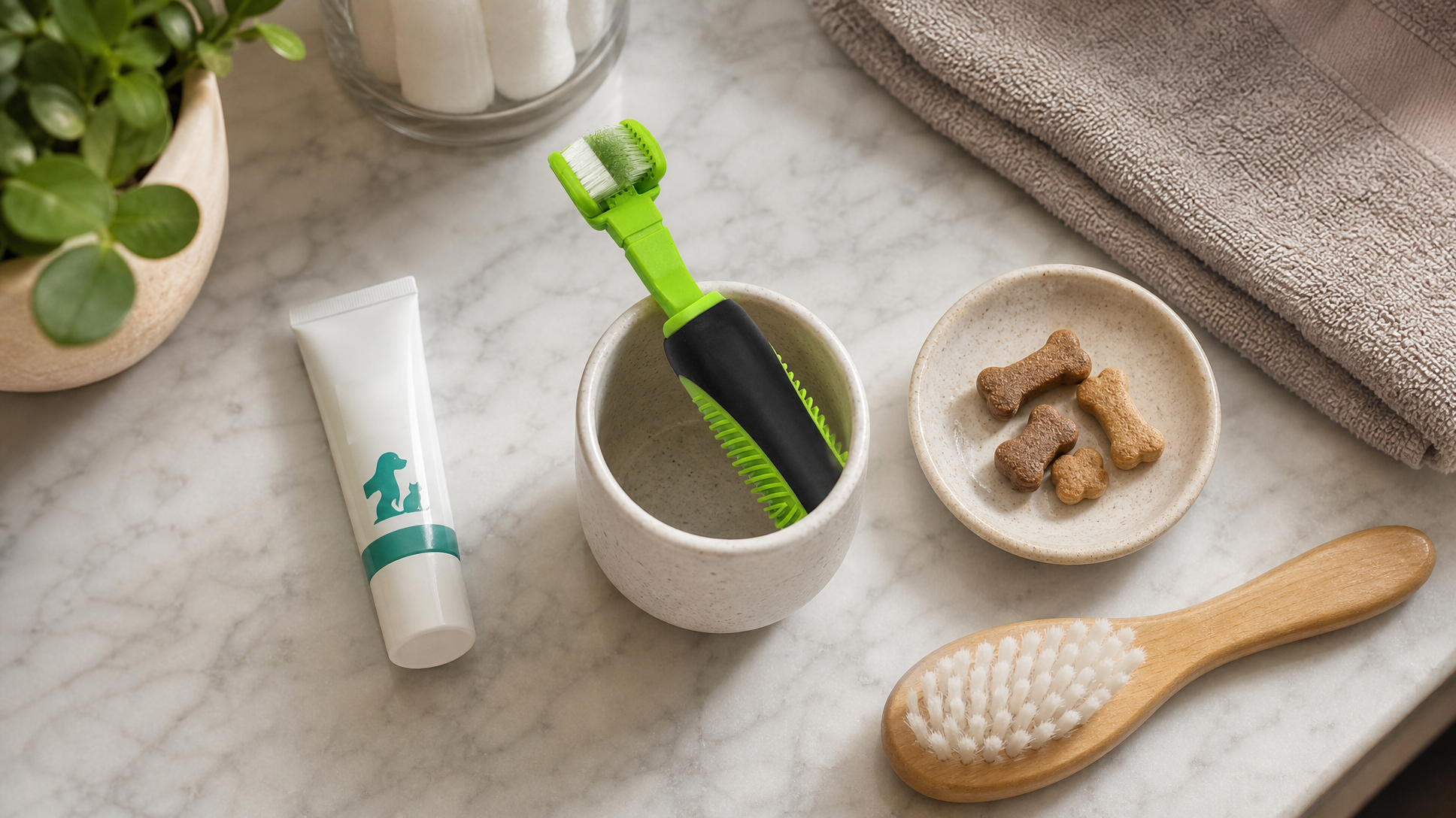
Keep it simple. You need a pet-safe toothpaste (never use human toothpaste — the fluoride and xylitol in most formulas are toxic to pets) and a toothbrush designed for animals. The Pet Life® 'Denta-Clean' Dual-Sided Action Bristle Pet Toothbrush is built specifically for this: a triple-sided brush head that cleans the outer, inner, and chewing surfaces of the tooth simultaneously, soft bristles that are gentle on sensitive gums, a flexible neck that bends to reach the back molars, and an ergonomic anti-skid handle so you're not fumbling mid-session. It works for both dogs and cats, regardless of size.
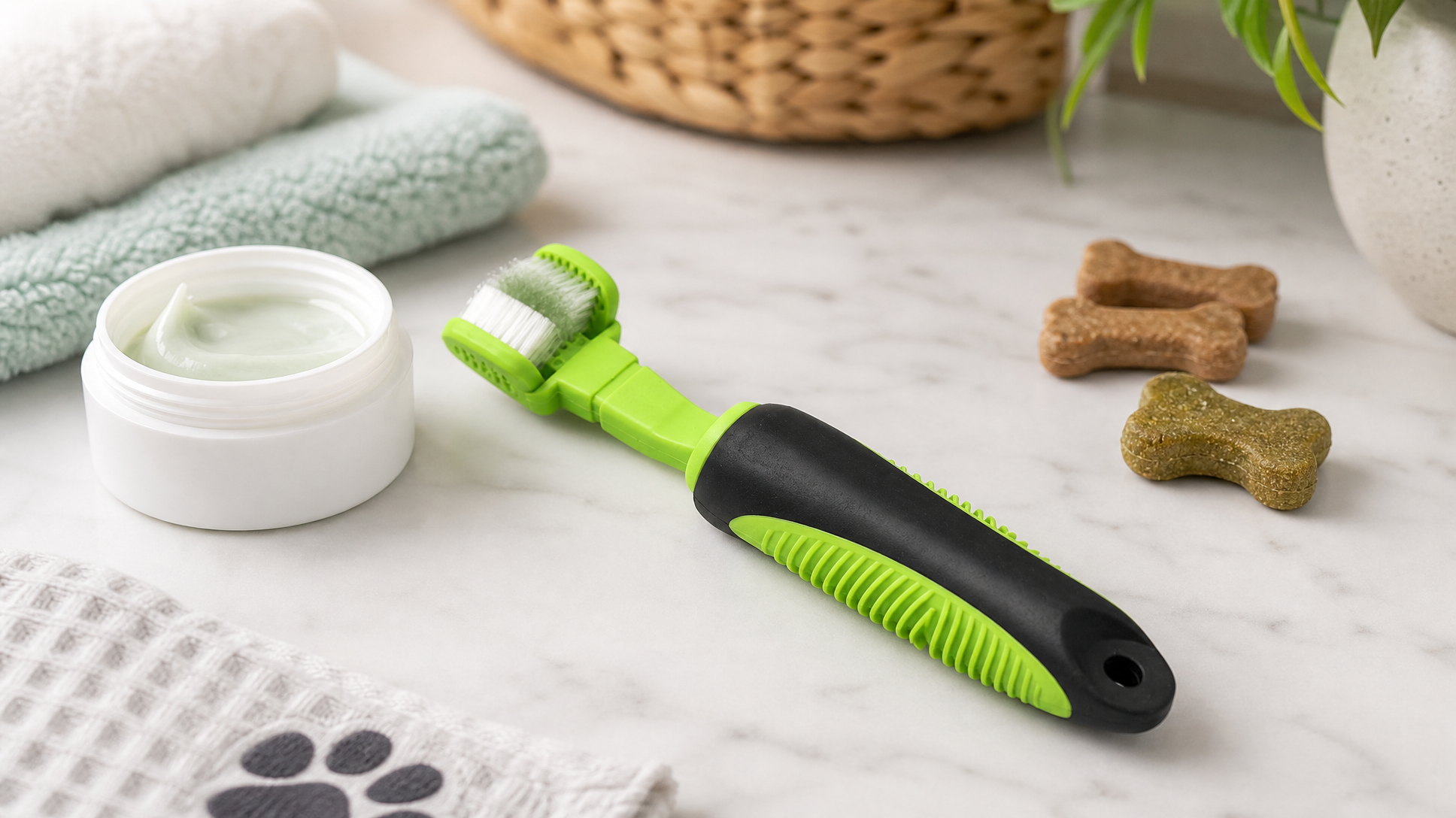
That triple-sided design matters more than it sounds. With a standard single-sided brush, you're making multiple passes over each tooth — which means more time in your pet's mouth, more resistance, and more room for things to go sideways. A brush that wraps around the tooth and cleans three surfaces at once cuts the time significantly. Less time = less protest.
The Step-by-Step Introduction (Don't Skip This)
Spread this over several days, not one afternoon. Each step should feel easy and end on a positive note — a treat, some praise, a play session. The goal is for your pet to associate the toothbrush with something good before the actual brushing ever begins.
- Day 1–2: Just show the toothbrush. Let your pet sniff it. Don't open their mouth. Put it down, give a treat. That's it. You're building neutral-to-positive associations with the object itself.
- Day 3–4: Touch the outside of the muzzle. With the brush nearby (or in hand), gently touch the outside of your pet's lips and cheeks. No opening the mouth yet. Treat and praise after.
- Day 5–6: Introduce the toothpaste. Let your pet lick a small amount of pet toothpaste off your finger or the brush. Most pet toothpastes come in flavors like poultry or beef — this is usually the moment reluctant pets start to come around.
- Day 7: First contact with teeth. Gently lift the lip and touch the brush to the front teeth for just a few seconds. Don't scrub yet. End immediately, treat generously.
- Day 8 onward: Begin actual brushing. Work in short sessions — even thirty seconds of actual brushing is a win at first. Build up gradually to a full session as your pet grows comfortable.
The Brushing Motion That Actually Works
Angle the brush at roughly 45 degrees toward the gumline — that's where plaque accumulates and where gum disease starts. Use small, gentle circular motions rather than hard back-and-forth scrubbing. The soft bristles on the Denta-Clean do the work; you don't need pressure.
Start with the easier-to-reach front teeth and canines, then work toward the back premolars and molars. The flexible neck on the brush is your friend here — it lets you angle into those back areas without contorting your wrist or forcing your pet's mouth open wider than necessary. The inner tooth surfaces (tongue side) are harder to access and less critical for plaque control, so if your pet tolerates the outer surfaces well, you're already doing most of the work.
For cats especially: keep sessions short and calm. Cats are more sensitive to restraint than dogs, so a light, confident touch beats a firm grip every time. Let them move a little — chasing the brush slightly is fine as long as the teeth are getting contact.
How Often, and What to Expect
Daily is the goal. Plaque starts hardening into tartar within a couple of days, so infrequent brushing has limited impact on preventing buildup. That said, a few times a week is genuinely better than nothing — don't let perfect be the enemy of good here.
In the first week or two, don't be discouraged if your pet fidgets. That's normal. What you're watching for is a gradual decrease in resistance — fewer head turns, less pawing at the brush, maybe even a pet who trots over when they see the toothbrush because they know a treat is coming. That shift happens faster than most people expect when the introduction is done right.
If you notice red or bleeding gums, persistent bad breath that doesn't improve, or your pet seems to be in pain during brushing, those are signs to check in with your vet before continuing. Brushing at home is preventive care — it's not a substitute for a professional dental exam.
One Tool That Makes a Real Difference
The honest reason most at-home dental routines fail isn't commitment — it's friction. When brushing takes too long, when the brush doesn't reach the back teeth, when your hand cramps from fighting a squirming pet, the habit quietly dies. A brush designed for the actual anatomy of a dog or cat mouth, with a handle that gives you real control, removes most of that friction.
The Pet Life® 'Denta-Clean' triple-sided brush is available at Petocart with free shipping across the USA. If you're building a dental routine from scratch, it's the right place to start — and you can use code WELCOME5 for a discount on your first order.
Browse the full range of best-selling pet care products at Petocart to round out your pet's grooming routine.
Frequently Asked Questions
Can I use a human toothbrush on my dog or cat?
It's not recommended. Human toothbrushes are designed for flat human teeth and can be too stiff and awkwardly shaped for a pet's curved jaw. More importantly, never use human toothpaste — fluoride and xylitol, both common in human formulas, are toxic to pets. Use a toothbrush and toothpaste specifically formulated for animals.
How do I brush a cat's teeth if they absolutely won't sit still?
Start smaller than you think you need to. With cats, even touching the outside of the lips with the brush counts as progress in the first week. Keep sessions to under a minute, use a strongly flavored pet toothpaste (poultry flavor tends to work well), and never restrain the cat tightly — a relaxed, confident touch gets further than force. Consistency over days and weeks matters more than any single session.
Is the Pet Life Denta-Clean toothbrush suitable for both small and large pets?
Yes — the Denta-Clean is designed to work for dogs and cats of all sizes. The triple-sided brush head and flexible neck help it adapt to different mouth shapes, and the ergonomic handle gives you control whether you're working with a small cat or a large dog.
How long does it usually take before a pet accepts regular tooth brushing?
Most pets that are introduced gradually — following a multi-day warm-up rather than jumping straight into a full session — show noticeably less resistance within two to three weeks. Some dogs take to it within days, especially when a tasty toothpaste is involved. Cats can take a little longer, but steady, short sessions almost always get there.