Cart
0
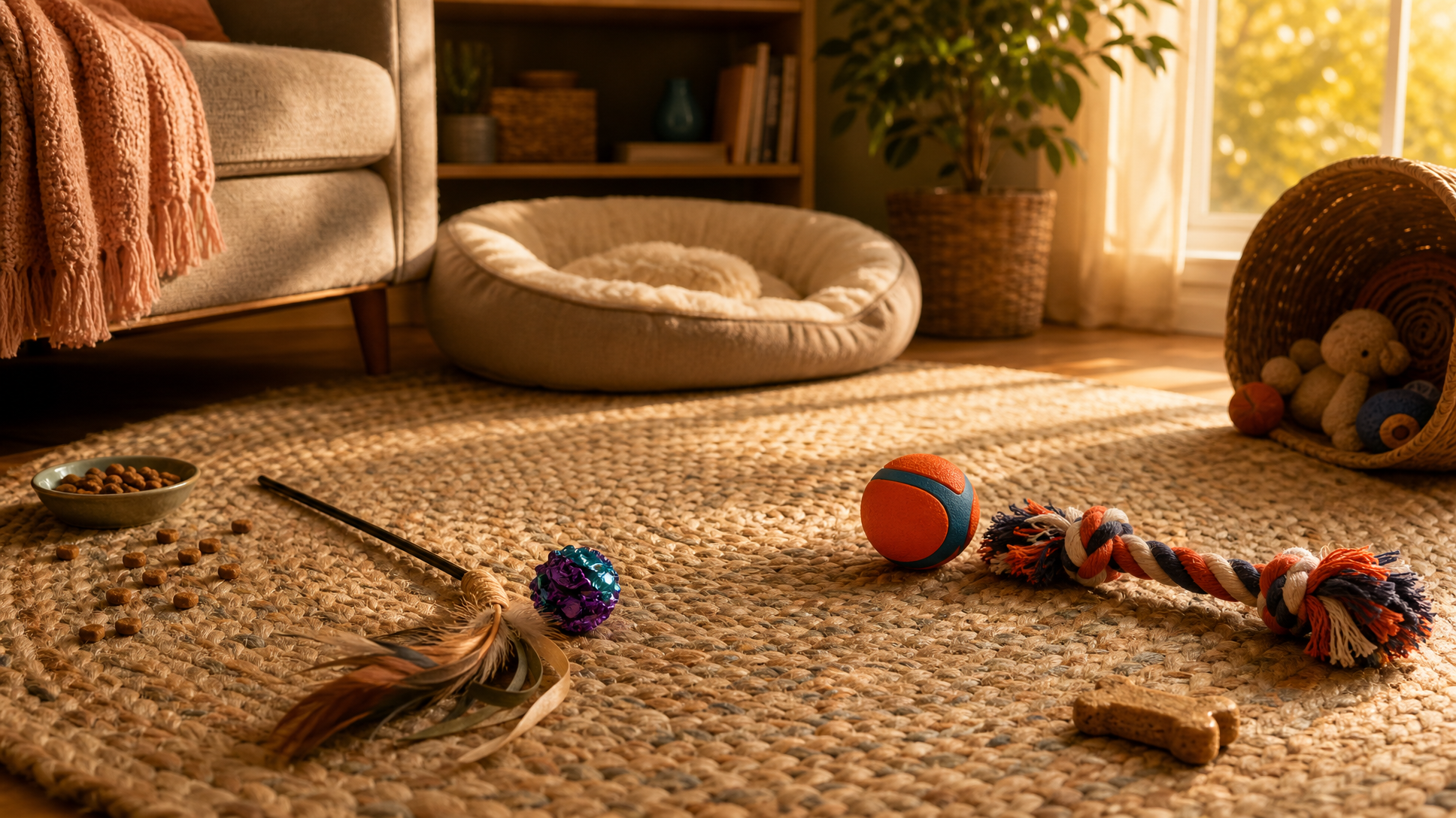
You buy a squeaky plush toy. The dog mauls it in four minutes and loses interest. The cat sniffs it once and walks away. You try a wand with feathers — the cat goes absolutely feral for it, and the dog just sits there looking confused. So you buy a laser pointer thinking both of them will love it. The dog chases it frantically but gets frustrated when he can't catch anything. The cat stalks it with laser focus for thirty seconds, then strolls off.
If this sounds familiar, you're not doing anything wrong. The toys aren't broken. The issue is that cats and dogs are not just different animals — they play from completely different instincts, and those instincts demand different mechanics from an interactive toy.
How Dogs Play (and Why It's About the Chase)
Dogs are social hunters. Historically, they worked in packs — running prey down over distance, coordinating movement, and eventually catching something. That ancestry shows up in how they play today. Most dogs are motivated by movement, pursuit, and retrieval. They want to chase something, catch it, and bring it back (or shake it to death, depending on the breed).
This is why a ball thrown across the yard works so well for so many dogs. The motion triggers the chase drive. The catch delivers a reward. The return — in retrievers especially — is genuinely satisfying to them, not just trained behavior. Interactive dog toys that tap into this tend to involve unpredictable movement across a surface, a reward hidden inside (like a treat puzzle), or something the dog can carry and shake. The engagement is usually high energy and externally directed — the dog is reacting to something moving away from it.
Dogs also play socially. A tug rope works because there's resistance on the other end — a simulated opponent. Many dogs will play with a toy enthusiastically when a person is involved, then ignore the same toy the moment it's left on the floor. The interaction is part of the point.
How Cats Play (and Why It's About the Stalk)
Cats are solitary ambush predators. Their hunting style isn't a long chase — it's a patient, focused stalk followed by a short, explosive burst. Watch a cat with a wand toy and you'll see exactly this: the slow creep, the haunches lowering, the tail twitching, the pupils dilating, and then the sudden pounce. That full sequence is what a cat needs to feel satisfied.
This is why a toy that just bounces around the room randomly often doesn't hold a cat's attention for long. It doesn't give them anything to stalk. The best interactive cat toys mimic prey behavior — they dart, pause, twitch, and hide. A feather wand that you drag slowly under a blanket and then flick out suddenly? That's irresistible to most cats, because it behaves like actual prey would.
Cats also need the kill. A play session that ends without the cat catching anything can leave them frustrated and overstimulated. This is one reason interactive electronic cat toys that move continuously without ever being catchable — like some automatic laser pointers — can actually increase anxiety in some cats rather than relieving it. Giving them a small plush toy to bite and kick at the end of a wand session mimics the catch-and-kill moment and lets them mentally close the loop.
The Mechanics That Work for One Almost Never Work for the Other
Here's where the practical mismatch becomes obvious. Look at what each species actually needs from a toy:
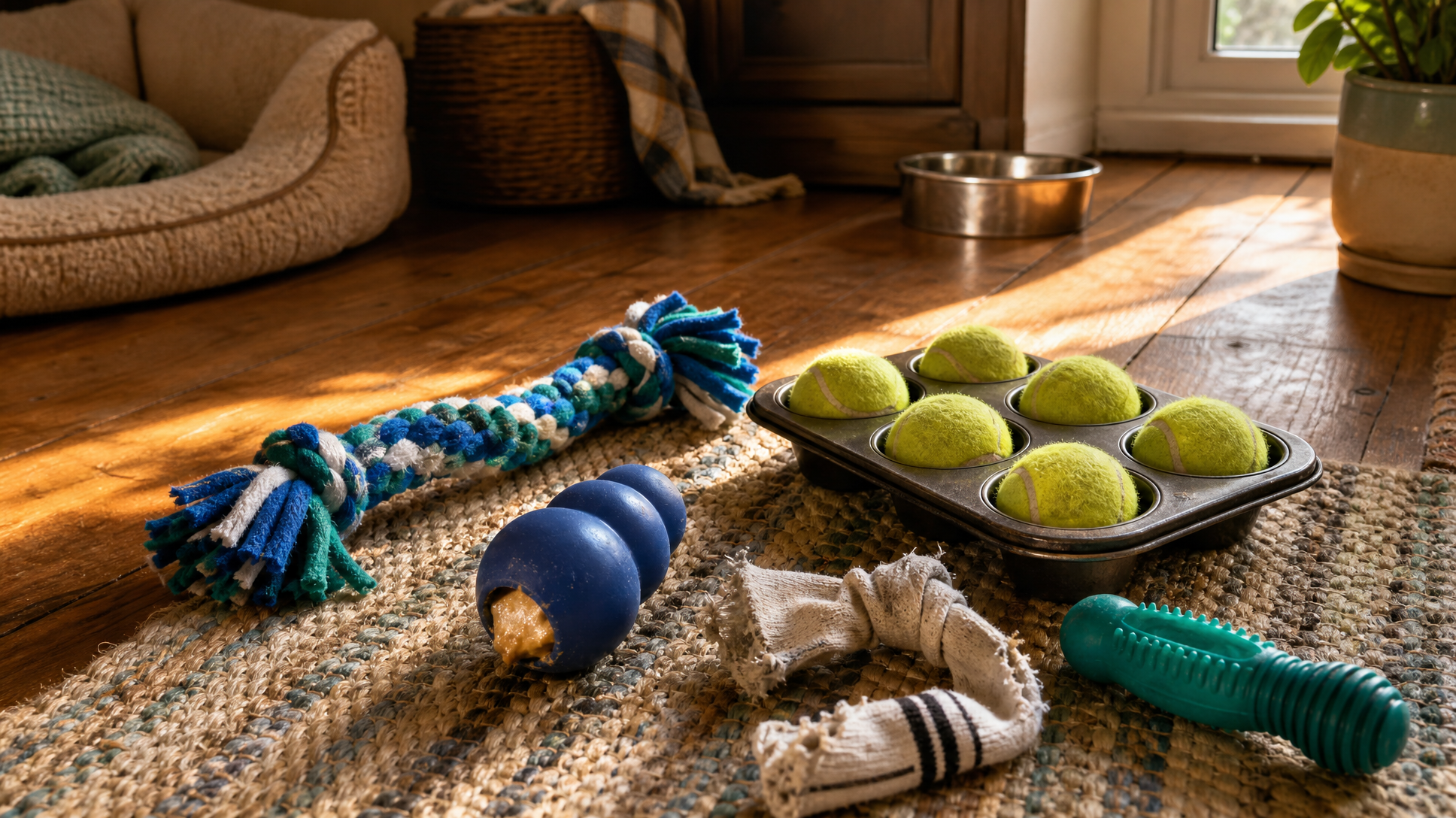
- Dogs need distance, momentum, and something to retrieve or wrestle. Balls, tug ropes, fetch sticks, treat-dispensing puzzles that reward persistence — these work because they match the chase-and-catch-and-carry loop.
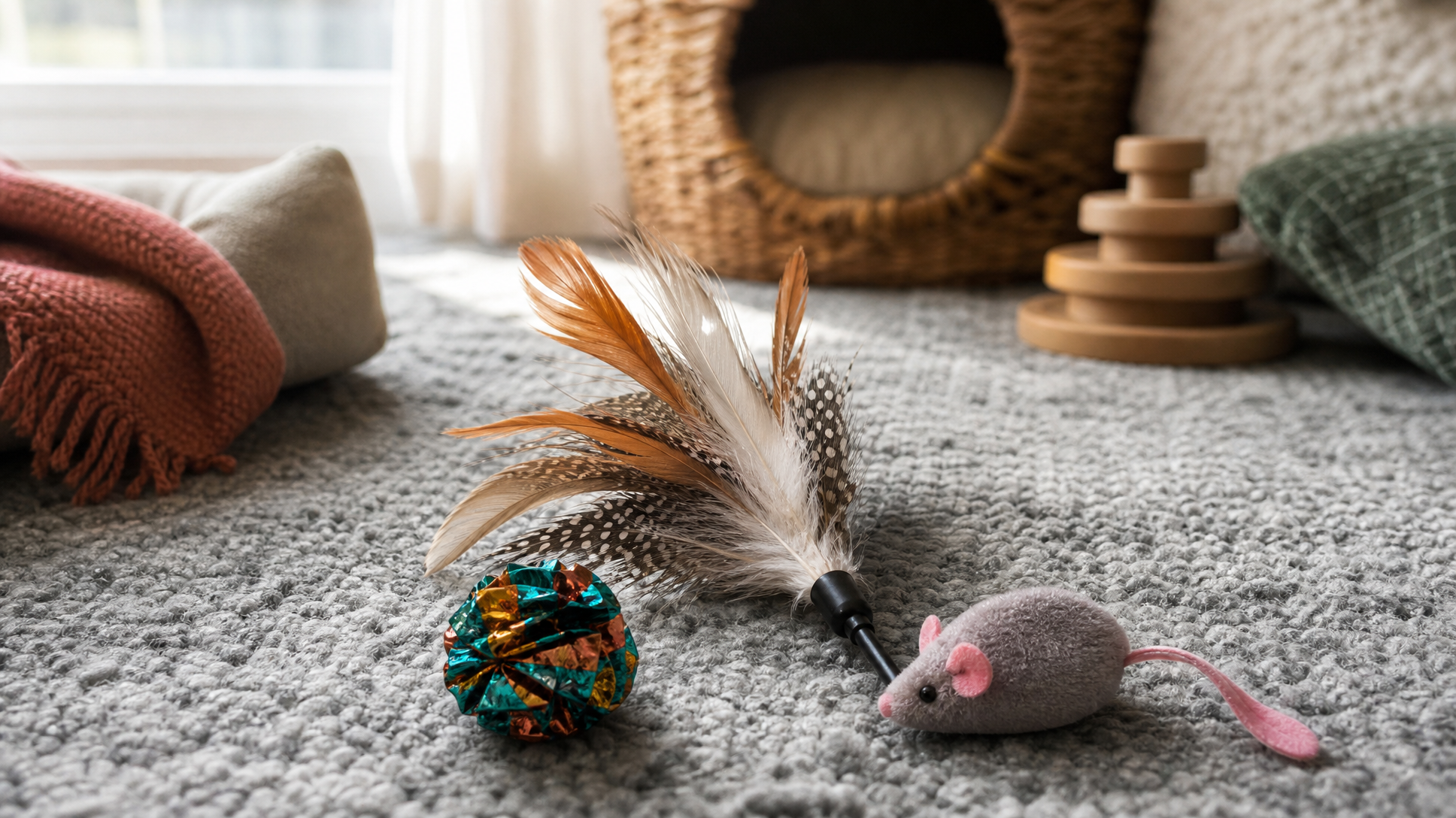
- Cats need small, erratic, prey-like movement they can stalk and pounce on. Wand toys, crinkle balls they can bat and chase in short bursts, tunnels to ambush from, and puzzle feeders that reward careful pawing — these match the stalk-pounce-catch sequence.
A toy designed for one almost structurally fails for the other. A rope tug toy has no prey-like movement for a cat to stalk — it's just a static object unless someone is pulling it, and cats aren't wired to tug. A feather wand is too light and small to satisfy a dog's need to carry and shake something, and the thin rod can be dangerous if a larger dog grabs it.
Size is another issue that gets overlooked. A toy that's appropriately sized for a cat to bat around is a choking hazard for many dogs. A toy sized for a Labrador is simply too large and heavy for a cat to interact with meaningfully.
The "Interactive" Label Doesn't Mean the Same Thing for Both
Pet toy marketing uses "interactive" loosely, and it's worth being skeptical. For dogs, interactive usually means the toy responds to the dog's actions — a treat puzzle that releases food when the dog pushes a slider, or a ball that bounces unpredictably. For cats, interactive often means the toy moves in prey-like ways, either through your input (a wand) or an automatic motor (a spinning feather toy).
A toy labeled "for pets" that sits in between these two definitions often does neither job well. It won't move in the darting, stuttering way that triggers a cat's stalk instinct, and it won't offer the resistance or retrievability that keeps a dog engaged. When you see a toy marketed at both species, it's worth asking: what specific play behavior does this actually support?
What to Look for When You Have Both a Cat and a Dog
The honest answer is: buy separate toys. It's not a marketing ploy — it's just species biology. But here's a practical way to think about it when you're shopping:
For your cat: prioritize toys with variable, unpredictable movement. Wand toys you control are the gold standard because you can adjust the speed and rhythm to keep the cat in that stalking state. Automatic toys with irregular movement patterns (not just continuous spinning) work well for solo play. Small, lightweight toys they can carry in their mouth after the catch matter more than people realize.
For your dog: match the toy to the breed's drive. High-energy retrievers want fetch-style toys and things they can carry. Terriers and herding breeds often do better with tug games and puzzle feeders that reward persistence and problem-solving. A dog that gets bored quickly with a toy usually needs more unpredictable movement or a treat incentive built in.
If you want to understand more about matching collar and gear choices to your dog's size and strength — a related decision that also gets oversimplified — the post on how to choose the right dog collar for large and strong breeds covers similar species-specific logic.
You can also browse the full range of toys and accessories for both cats and dogs at Petocart — everything ships free across the USA on eligible orders, and the assortment is split by species so you're not guessing.
The takeaway is simple: a toy that respects how an animal actually hunts will always outperform one that doesn't. Stop trying to find the one toy that works for everyone in the house, and start buying the right tool for each animal. Your cat will stalk it. Your dog will chase it. And neither of them will look at you like you've completely missed the point.
Shop toys designed for cats and dogs separately at Petocart — free USA shipping on eligible orders.
Frequently Asked Questions
Can cats and dogs ever share the same toy safely?
Occasionally, but it's the exception rather than the rule. The main risks are size mismatch (a cat toy can be a choking hazard for dogs) and material durability (a toy built for a cat will fall apart quickly under a dog's bite pressure). If you do let them share, supervise the session and check the toy for damage afterward.
Why does my cat lose interest in a toy after a few minutes?
Cats are wired to lose interest once "prey" stops behaving like prey — meaning a toy that moves in the same pattern repeatedly will bore them quickly. Vary the speed, let the toy go still for a moment, then dart it suddenly. Ending the session by letting the cat catch and hold the toy also helps them feel satisfied rather than frustrated.
My dog ignores toys when I'm not involved. Is that normal?
Very common, especially in social breeds. Dogs evolved to hunt cooperatively, so many of them find toys far more engaging when a person is on the other end of the interaction. Treat-dispensing puzzle toys are one of the better solutions for solo play, because the food reward gives the dog a reason to persist without needing a human to make the toy move.
Are laser pointers actually bad for cats?
Not inherently, but they can be frustrating if the session always ends without a catch. Because the dot can never be physically caught, some cats become chronically overstimulated or anxious with regular laser play. The fix is simple: end every laser session by redirecting the cat to a physical toy they can pounce on and bite, so the hunt has a satisfying conclusion.