Cart
0
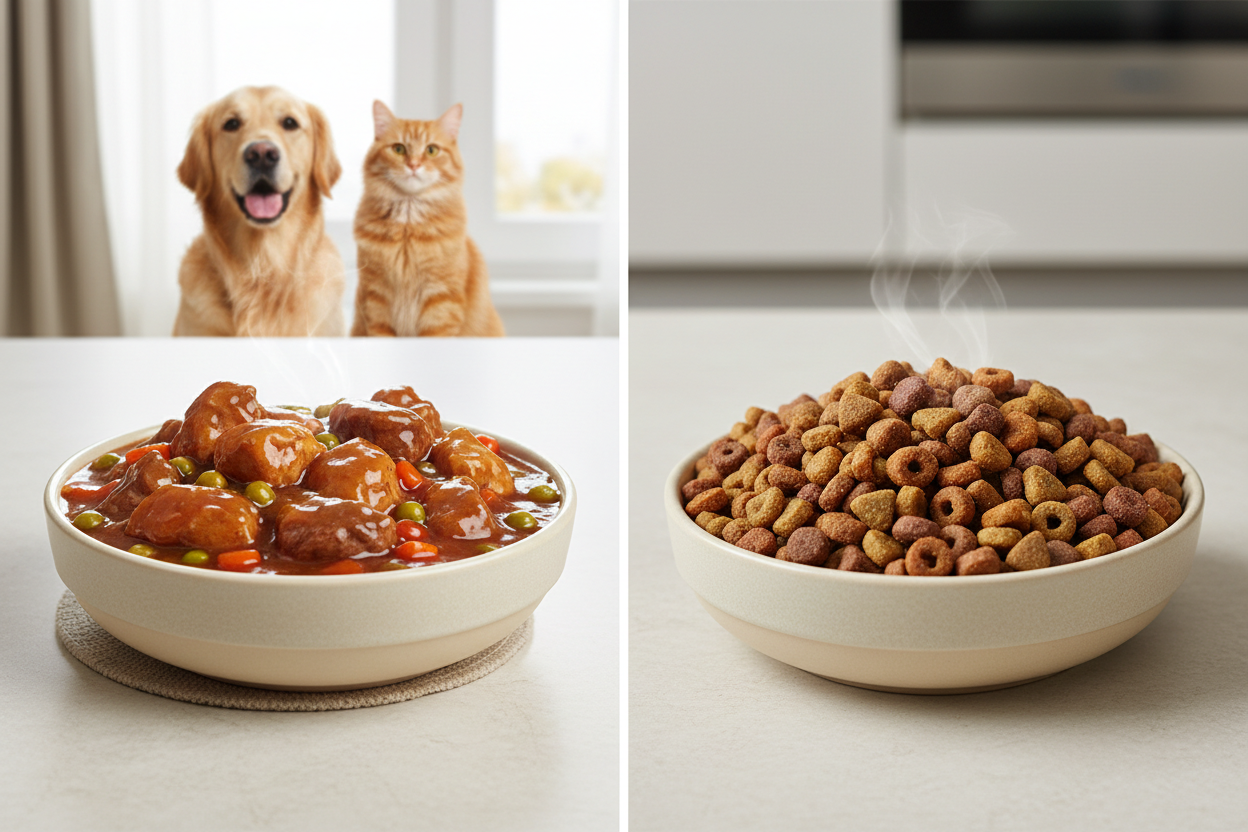
Wet vs Dry Pet Food: Choosing the Best Diet for Your Dog or Cat
Deciding between wet and dry pet food can be challenging, but understanding their unique benefits in nutrition, hydration, oral health, and convenience helps you select the ideal diet tailored to your furry friend’s lifestyle and health needs.
Key takeaways
- Wet food offers superior hydration, higher protein, and is highly palatable, making it excellent for picky, elderly, or ill pets.
- Dry food provides calorie density, dental benefits, convenience, and cost-effectiveness, ideal for active pets and busy households.
- A hybrid diet combining wet and dry food can balance hydration, oral health, and taste variety, supporting diverse pet needs.
- Semi-moist foods, while flavorful, often contain added sugars and preservatives and are best reserved for occasional treats.
- Pet species differ significantly; cats benefit from high-protein, moist diets, whereas dogs tolerate carbohydrate-rich kibble better.
- Consulting your veterinarian and reading labels carefully ensures your pet receives complete, balanced nutrition.
Table of contents
- 1. Nutritional Content and Hydration: The Role of Moisture
- 2. Palatability: What Drives Pets to Enjoy Their Meals?
- 3. Dental Health: Crunching on the Benefits of Dry Food
- 4. Practicality and Expense: Tailoring Diets to Match Your Lifestyle
- 5. Semi-Moist Pet Food: Balancing Flavor and Nutrition
- 6. The Hybrid Diet: Merging Liquid Hydration with a Crispy Grit
- 7. Pets Aren’t Uniform: Tailoring Feeds to Your Pals’ Needs and Tastes
- 8. Dietary Evolution and Pets: Unraveling the Trail of Pet Treats
- 9. Perfect Pet Foods: Insights via Veterinary Know-Hows and Label Savvy
- 10. Practical Illusions and Parting Musings
1. Nutritional Content and Hydration: The Role of Moisture
Moisture content defines key differences between wet and dry pet food, influencing both hydration and nutritional intake.
Embracing the Benefits of Wet Food
- Wet foods contain approximately 60% to 80% moisture (e.g., wet dog food at 78%), promoting adequate hydration.
- They are rich in protein and fat, resembling natural prey diets, which is especially advantageous for cats.
- Higher palatability helps stimulate appetite in sick, elderly, or finicky eaters.
- Additional water in their diet reduces risk of dehydration and urinary tract diseases.
Dry Food Nutritional Density and Caloric Impact
- Dry foods typically have only 6% to 10% moisture, yielding higher calorie density.
- Ideal for active pets requiring extra energy and for owners using precise portion control.
- Its shelf stability allows pets to graze throughout the day without spoilage concerns.
- However, its increased carbohydrate content—especially in cat food—may promote weight gain, warranting caution.
2. Palatability: What Drives Pets to Enjoy Their Meals?
The taste, aroma, and texture of food shape your pet’s acceptance and enjoyment during mealtime.
Wet Food: A Palatable Option
- Wet food’s aroma, flavor, and texture appeal to picky eaters and pets with diminished appetite.
- It is especially favored by cats due to scent and texture mimicking natural prey.
- Cats lack sweetness perception but crave amino acids, which wet food formulations supply abundantly.
- Wet food supports appetite in elderly or convalescing pets.
Dry Food Taste and Enhancements
- Dry food generally has milder aromas and flavors but can be enhanced by toppings or mixing with wet food.
- Specialized coatings, such as fats, oils, and natural flavor enhancers, improve palatability.
- Brands like Eukanuba add savory coatings combining taste with dental benefits.
- Combining wet and dry foods in multi-pet homes can reduce meal monotony and offer variety.
3. Dental Health: Crunching on the Benefits of Dry Food
Dry kibble’s texture provides mechanical cleaning benefits to promote oral hygiene.
Nurturing Oral Health with Dry Food
- Chewing dry kibble helps reduce plaque and tartar buildup, especially when kibble is designed for dental support.
- Features like unique kibble shapes, polyphosphate coatings (e.g., sodium hexametaphosphate), and additives such as 3D DentaDefense aid in plaque control.
- Regular consumption may lower risks of gingivitis and decrease frequency of professional dental cleanings.
Wet Food: A Hindrance to Oral Health
- Wet food's soft texture lacks mechanical cleaning action, potentially increasing plaque accumulation.
- Pets primarily on wet food may require additional dental care measures like brushing, dental chews, or regular vet cleanings.
4. Practicality and Expense: Tailoring Diets to Match Your Lifestyle
Daily convenience and cost often influence food choice as much as nutrition and health.
Capitalizing on the Perks of Dry Food
- Dry kibble offers long shelf life without refrigeration, lasting weeks after opening.
- Often more budget-friendly on a calorie basis with available bulk purchasing options.
- Easy to use with puzzle feeders or as free-foraging snacks.
- Supports grazing behavior, ideal for pets eating throughout the day.
Weighing the Pros and Cons of Wet Food
- Must be refrigerated after opening and limited to meal-sized portions.
- Tends to be costlier on a per-calorie basis.
- Less convenient for owners with erratic schedules but beneficial for pets needing frequent feeding or with particular health concerns.
5. Semi-Moist Pet Food: Balancing Flavor and Nutrition
Semi-moist foods occupy a moisture middle ground (20%–65%) and offer appealing taste and texture but come with important caveats.
- Often contain high levels of sugars and sodium, which may harm pets with diabetes, kidney, or heart conditions.
- Usually have preservatives and fillers that deviate from optimal dietary guidelines.
- Recommended primarily for occasional treats rather than daily feeding staples.
6. The Hybrid Diet: Merging Liquid Hydration with a Crispy Grit
Many pet owners find combining wet and dry foods offers balanced nutrition and enjoyment.
- Wet food supports hydration boosts.
- Dry food contributes to dental health.
- Mixing textures and flavors improves palatability and reduces food boredom.
- Offers dietary flexibility for pets with shifting needs or transitioning diets.
Crafting a Viable Hybrid Regimen
- Strict portion control prevents overfeeding and unwanted weight gain.
- Calorie counts must be carefully balanced across wet and dry components.
- Veterinary consultation ensures the hybrid diet meets life stage and health-specific needs.
7. Pets Aren’t Uniform: Tailoring Feeds to Your Pals’ Needs and Tastes
Dogs and cats differ in metabolism and flavor preferences, influencing optimal dietary choices.
Dogs
- Efficient carbohydrate digesters, tolerating kibble’s higher carb content well.
- Enjoy a variety of textures and flavors.
- Benefit from dental health aided by dry food.
Cats
- Obligate carnivores with limited carbohydrate digestion abilities.
- Don’t sense sweetness but strongly prefer amino acid-rich flavors found in wet food.
- May face digestive slowdowns and hairball issues on dry diets, though evidence is mixed.
"Understanding these species-specific needs enables pet parents to tailor feeding strategies for optimal health and enjoyment."
8. Dietary Evolution and Pets: Unraveling the Trail of Pet Treats
Since the canned food dominance before the 1950s, dry kibble innovation—pioneered by companies such as Purina—transformed pet nutrition.
Advancements combine science and packaging technology to deliver complete nutrition while supporting dental, digestive, and immune health, enhancing millions of pets’ lives worldwide.
9. Perfect Pet Foods: Insights via Veterinary Know-Hows and Label Savvy
- Partnering with your veterinarian is vital when addressing health issues or specialized diets.
- Scrutinize product labels for AAFCO-complete and balanced diet endorsements.
- Choose foods free from unnecessary sugars, excess sodium, and fillers to promote optimal health.
This collaboration ensures your pet’s food supports longevity, vitality, and happiness.
10. Practical Illusions and Parting Musings
Balancing wet vs dry food involves weighing moisture content, digestibility, texture, hydration, convenience, and cost considerations.
By understanding their unique qualities, you can design a diet that fulfills your pet’s nutritional, health, and lifestyle needs, paving the way to a happy, healthy, and vibrant life.
Explore quality pet food options from trusted brands to find the perfect fit for your companion’s needs.
Frequently Asked Questions (FAQ)
Q1: Is wet food better than dry food for my pet?
Wet food excels in hydration and palatability, especially for picky or sick pets, but dry food offers dental benefits and convenience. The best choice depends on your pet’s health, preferences, and lifestyle.
Q2: Can I feed my pet a combination of wet and dry food?
Yes, a hybrid diet combines the advantages of both, supporting hydration, oral health, and meal variety. Ensure proper portion control and veterinary guidance to maintain balanced nutrition.
Q3: Are semi-moist pet foods a good everyday option?
Semi-moist foods often contain added sugars and preservatives and are best used as occasional treats rather than daily staples.
Q4: How does diet differ between cats and dogs?
Cats require high-protein, moisture-rich diets with limited carbohydrates, while dogs better tolerate carbohydrate-containing dry kibble and enjoy varied textures and flavors.
Q5: What should I look for on pet food labels?
Look for AAFCO statements confirming complete and balanced nutrition, check ingredient quality, and avoid unnecessary sugars or sodium. Consulting with your vet helps interpret label information effectively.