Cart
0
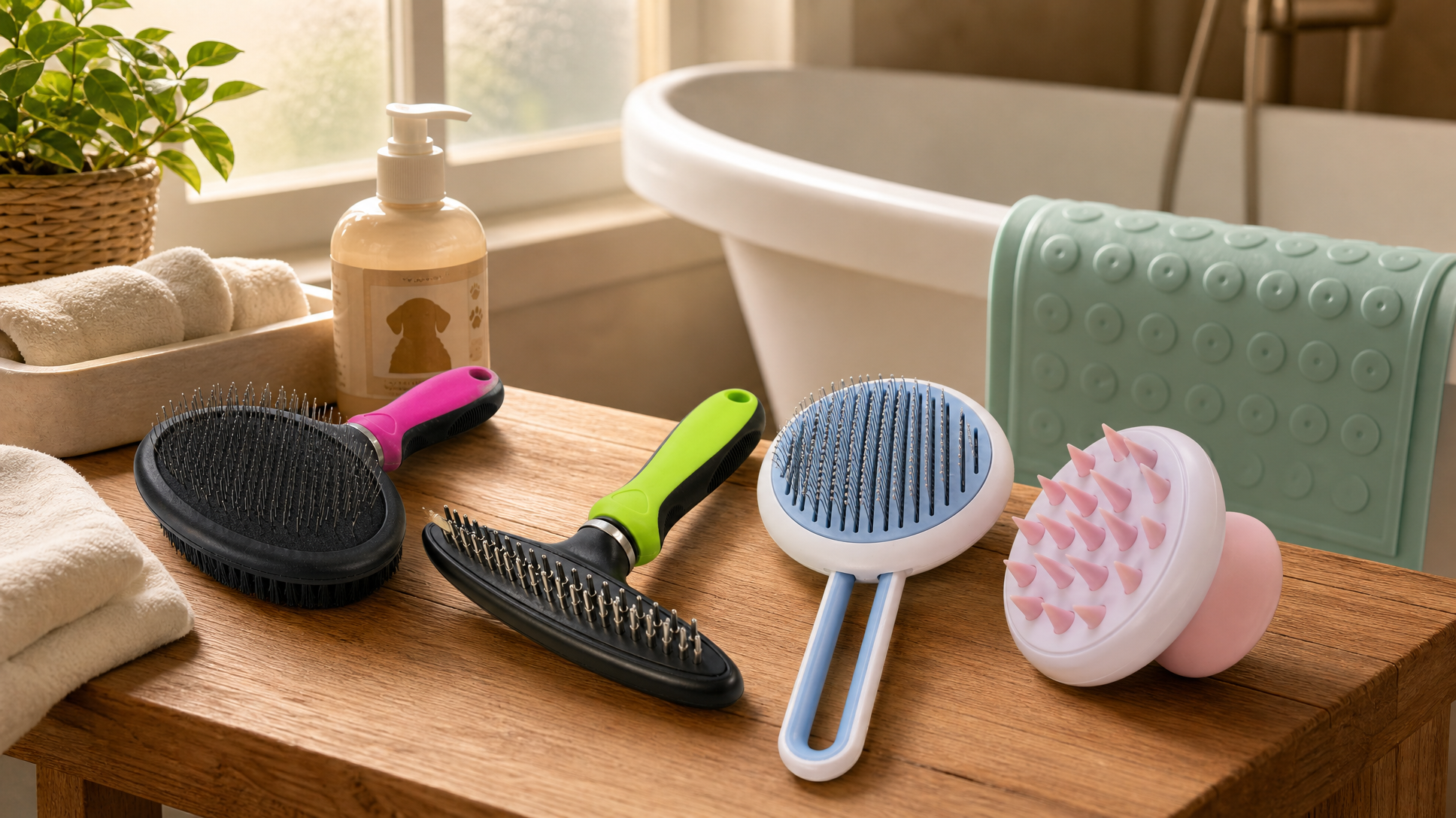
Here's the mistake almost every pet owner makes: they grab whatever brush is on the counter and use it for everything — before the bath, during the bath, after the bath. The coat ends up half-detangled, the dog ends up frustrated, and the owner wonders why grooming feels like such a chore.
The real issue isn't effort. It's sequencing. Different grooming tools are built for different coat conditions, and using a dry-coat tool in the tub (or a bath tool on a dry, matted coat) means neither one does its job properly. Once you understand which tool belongs where, a complete at-home grooming session stops feeling overwhelming and starts feeling like a routine you can actually stick to.
These four Pet Life® tools cover every stage of that routine — here's how to use each one.
The Dry-Coat Stage: Before the Bath
Never put a tangled, shedding coat into the tub. Water tightens mats and makes them significantly harder to work out afterward. The dry-coat stage is where you do the heavy lifting — removing loose fur, working through tangles, and prepping the coat so shampoo can actually reach the skin.
1. Pet Life® Flex Series Dual-Row Grooming Rake Pet Comb — for dense or double-coated breeds
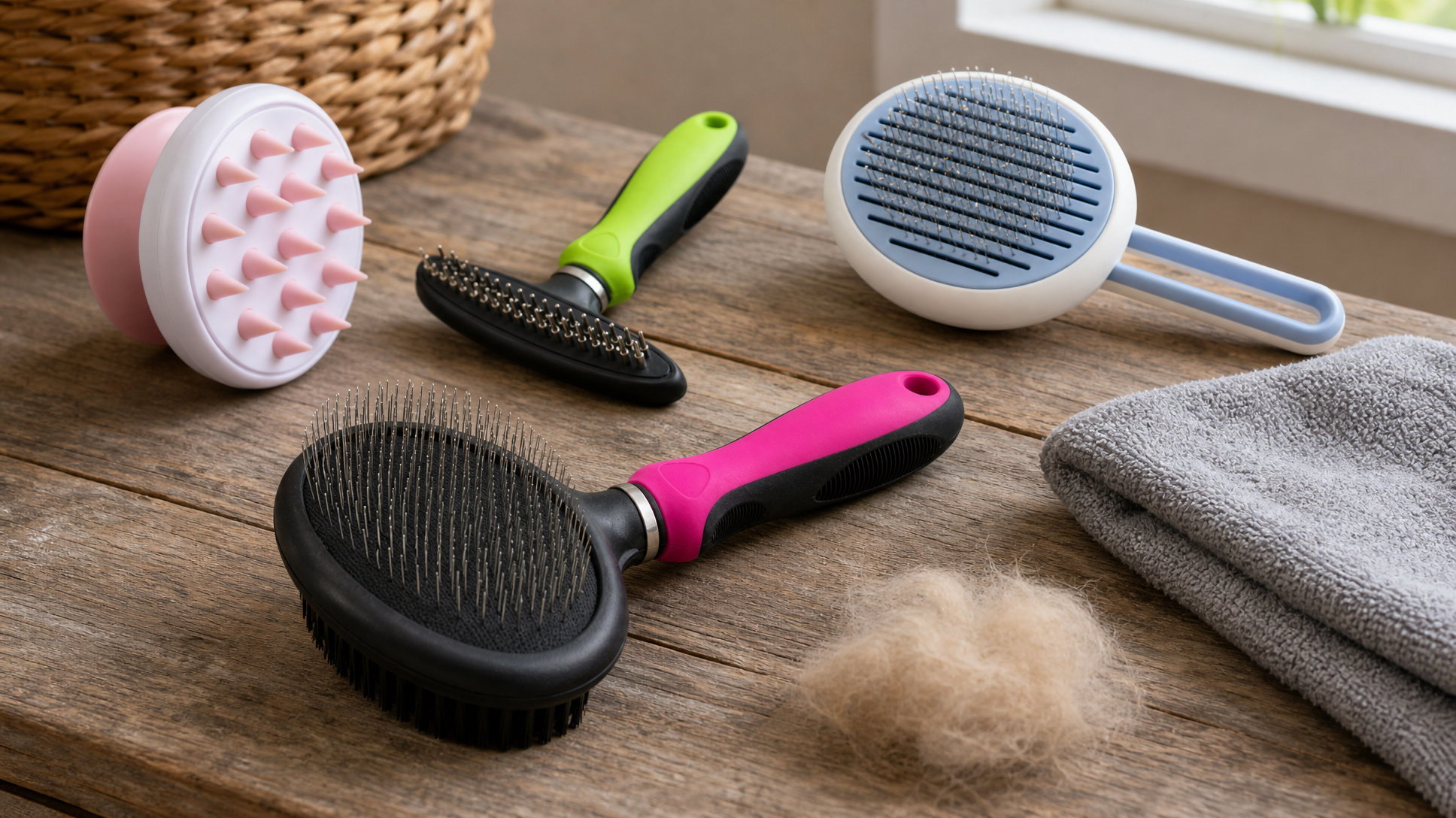
If your dog has a thick undercoat — a Husky, a Golden, a Bernese — this is your first tool out of the drawer. The rake's dual rows of rounded metal tines are designed to reach down through the topcoat and pull out the loose undercoat that a regular brush simply skims over. Work in sections, going with the direction of the coat growth, and you'll pull out a surprising amount of fur before the bath even starts. The ergonomic green-and-black handle gives you good control without tiring your wrist during longer sessions.
Use it dry. The tines aren't designed for a wet, sudsy coat, and you'll lose most of the deshedding benefit if you skip this step and go straight to the tub.
2. Pet Life® Flex Series 2-in-1 Dual-Sided Slicker and Bristle Grooming Pet Brush — the all-around dry-coat finisher
Once the rake has cleared the undercoat bulk, this dual-sided brush handles the rest. One side is a classic slicker — fine wire pins set in a flexible oval pad — that catches surface tangles and stray hairs the rake missed. Flip it over and the bristle side smooths and polishes the topcoat, distributing natural oils and giving the coat a finished look. The pink-and-black handle is comfortable to hold, and the flexible neck lets the brush head follow the contours of your pet's body rather than dragging flat against it.
This is also the brush to reach for between baths — a quick dry-brush session a few times a week keeps shedding manageable and reduces how often a full bath is actually necessary.
The Bath Stage: In the Tub
Once the coat is prepped and your pet is wet, the game changes. Metal pins and stiff bristles aren't doing anything useful on a soaking coat — and dragging them through wet fur can cause unnecessary pulling. This is where a purpose-built bath tool earns its place.
3. Pet Life® 'Scwubba' Handheld Bathing Brushing and Massaging Soft Flexible Grooming Pet Comb — the only tool designed for the tub
This one looks completely different from the others, and that's the point. The Scwubba is a compact, rounded silicone tool with soft, flexible conical nubs — no metal pins, no stiff bristles. You work it through your pet's wet coat while shampooing, and those silicone tips do two things at once: they help work the shampoo down to the skin rather than just lathering the surface fur, and they provide a gentle massaging action that most dogs genuinely seem to enjoy. The domed pink grip fits naturally in your palm.
Because it's silicone, it's easy to rinse clean and dries quickly. It's also gentle enough for pets with sensitive skin who tense up the moment they feel something scratchy during a bath. If your dog has historically been anxious in the tub, swapping in a tool that feels more like a massage and less like a scrub is often enough to change the whole mood of the session.
The Post-Bath Stage: Drying and Finishing
4. Pet Life® 'Concepto' Modern Bristle Grooming Pet Deshedder Comb — for finishing a clean, damp coat
Once your pet is out of the tub and towel-dried to damp (not soaking), the Concepto deshedder comb is the right tool to reach for. Its round, open-backed design in soft blue and white holds fine wire pins with rounded tips — gentle enough for a coat that's still a little fragile from the bath, effective enough to catch the last wave of loose fur that always seems to surface as the coat dries. The open slotted pad lets air circulate, which actually helps the coat dry faster as you brush.
Work through the coat in long, smooth strokes while it's still slightly damp. This is when the coat is most cooperative — the bath has loosened any remaining shed fur, and the Concepto picks it up before it ends up on your sofa cushions.
How It All Fits Together
A complete at-home grooming session, in order:
- Rake first (dry coat) — remove undercoat bulk with the Dual-Row Grooming Rake.
- Slicker and bristle brush (dry coat) — clear surface tangles and smooth the topcoat with the 2-in-1 Flex Brush.
- Scwubba in the tub (wet coat) — work shampoo to the skin and give your pet a proper massage-style lather.
- Concepto after the bath (damp coat) — deshed and finish as the coat dries.
That's it. Four tools, four distinct jobs, one routine that actually works from start to finish. The reason most at-home grooming sessions feel incomplete is that people skip one of these stages — usually the pre-bath detangle or the post-bath deshed — and then wonder why the coat still looks rough or why shedding picks back up within a day or two.
Build the habit of going through all four stages, even if you shorten each one on busy weeks, and your pet's coat will stay in noticeably better shape between professional grooming appointments.
Ready to put together a proper grooming kit? Browse the full Petocart grooming collection — every order ships free across the USA.
Frequently Asked Questions
Can I use a slicker brush on a wet coat?
It's not ideal. Metal pins on a wet coat tend to drag and pull rather than glide, which can be uncomfortable for your pet and less effective at detangling. The slicker brush does its best work on a dry or nearly dry coat. Save it for before the bath or after the coat has been towel-dried and is mostly dry.
How often should I go through a full grooming routine like this?
That depends on your pet's breed and coat type. Dogs with thick double coats or heavy shedders generally benefit from a full routine — including a bath — every few weeks, with dry brushing sessions in between. Short-coated dogs may need full baths less frequently. The dry-brush stage (rake and slicker) can be done as often as a few times a week for heavy shedders without any harm.
Is the Scwubba suitable for cats as well as dogs?
The soft, flexible silicone nubs on the Scwubba are gentle enough for most pets, and the tool is marketed for general pet use. That said, most cats strongly dislike baths, so whether you can actually use it in the tub depends entirely on your cat's temperament. For cats that tolerate bathing, it can work well as a lathering and massaging tool.
Do I need a deshedding rake if my dog has a short, single-layer coat?
Probably not. The Dual-Row Grooming Rake is most valuable for dogs with dense undercoats — think double-coated or thick-furred breeds where a regular brush can't reach the layer of loose fur beneath the topcoat. For short single-coated dogs, the 2-in-1 slicker and bristle brush is usually all you need for the dry-coat stage, and you can skip the rake entirely.