Cart
0
Most dog owners make the same call: if you're cold on the morning walk, your dog probably is too. And sometimes that's right. But plenty of dogs are genuinely uncomfortable in a coat they don't need, while others — the ones shivering through a five-minute bathroom trip — are going without one entirely. The real answer isn't about how cold you feel. It's about your specific dog.
Here's how to actually think through it.
The Dogs That Almost Always Need a Coat
Small dogs lose body heat faster than large ones — it's basic physics. A tiny body has proportionally more surface area relative to its mass, which means heat escapes quickly. Toy breeds, small mixes, and short-haired dogs in this size range are the most obvious candidates for winter layering. If your dog is small, lean, and short-coated, a coat isn't a fashion statement. It's genuinely useful.
Beyond size, coat density matters just as much. Double-coated breeds like Huskies and Malamutes carry their own insulation and rarely need help. Single-coated or hairless breeds — Greyhounds, Whippets, Chihuahuas, Maltese mixes — have little natural protection and feel the cold much more acutely. Senior dogs and puppies also regulate temperature less efficiently than healthy adult dogs, regardless of breed.
The Signs Your Dog Is Actually Cold
Watch for shivering, reluctance to keep walking, hunching the back, tucking the tail, or lifting paws off the ground. A dog that stops mid-walk and refuses to move isn't being stubborn — they're telling you something. If you see any of these consistently on cold days, a coat is worth trying.
On the flip side, a dog that's panting, trying to roll in snow, or constantly pulling the jacket off is probably too warm. Overheating in a coat is a real issue, especially for thick-coated breeds. The goal is comfort, not coverage for its own sake.
Temperature as a Starting Point (Not the Whole Story)
Temperature alone doesn't tell you much without knowing your dog. A healthy Labrador in 25°F weather is probably fine for a brisk walk. A tiny Chihuahua mix at 45°F with wind and rain may genuinely need a layer. Wind chill, wet conditions, and how long your dog will be outside all shift the calculus. A quick potty break is different from a long trail walk.
Think of temperature as a trigger to check whether your dog needs a coat, not automatic proof that they do or don't.
5 Dog Coats Worth Knowing About
Once you've decided your dog could use some help staying warm, the next question is what kind of coat actually fits the situation. Here's a look at four strong options — two built for warmth and softness, two built for active, all-weather use — that cover most dogs and most conditions.
1. Pet Life ® Luxe 'Purrlage' Pelage Mink Fur Dog Coat
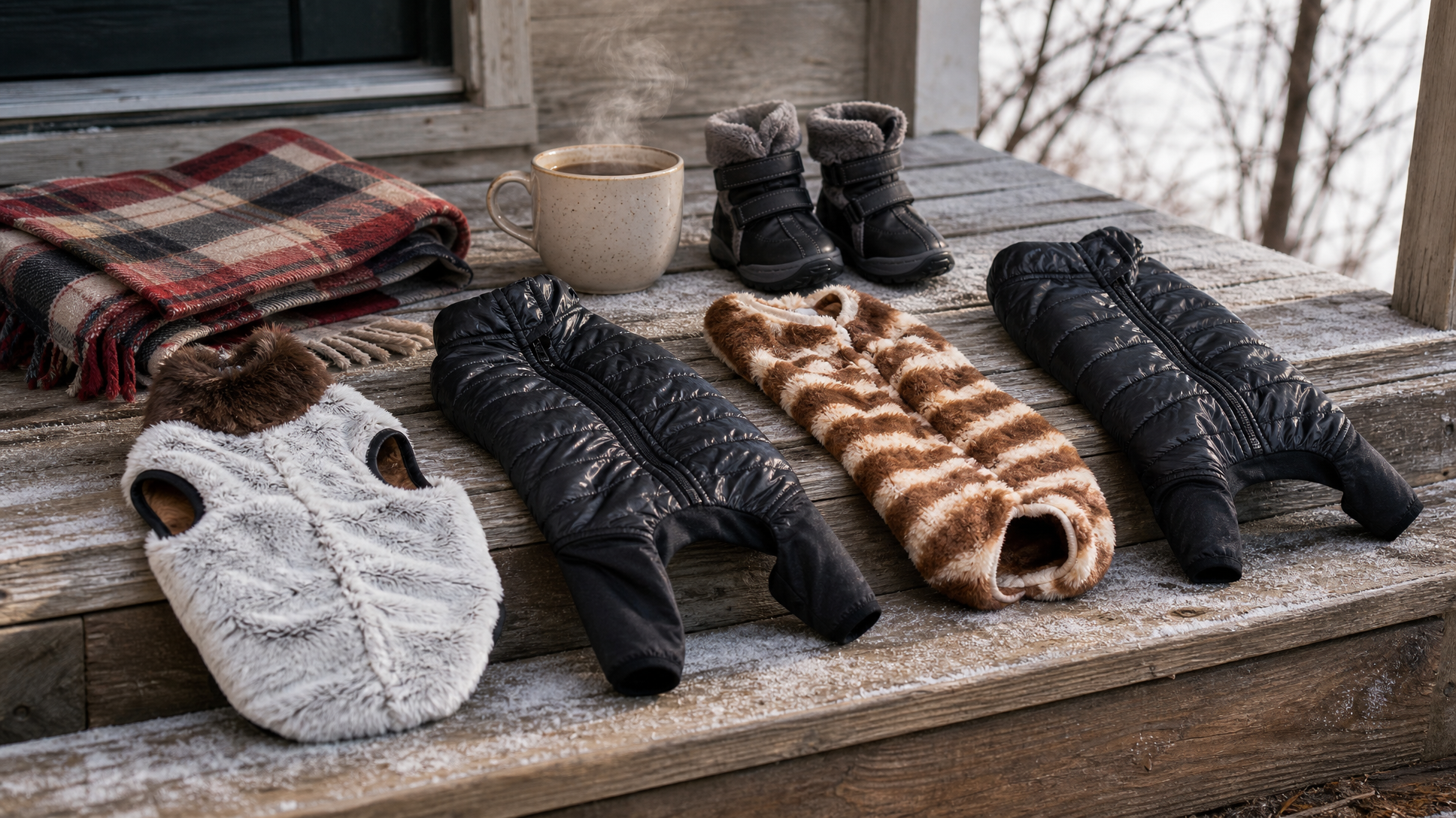
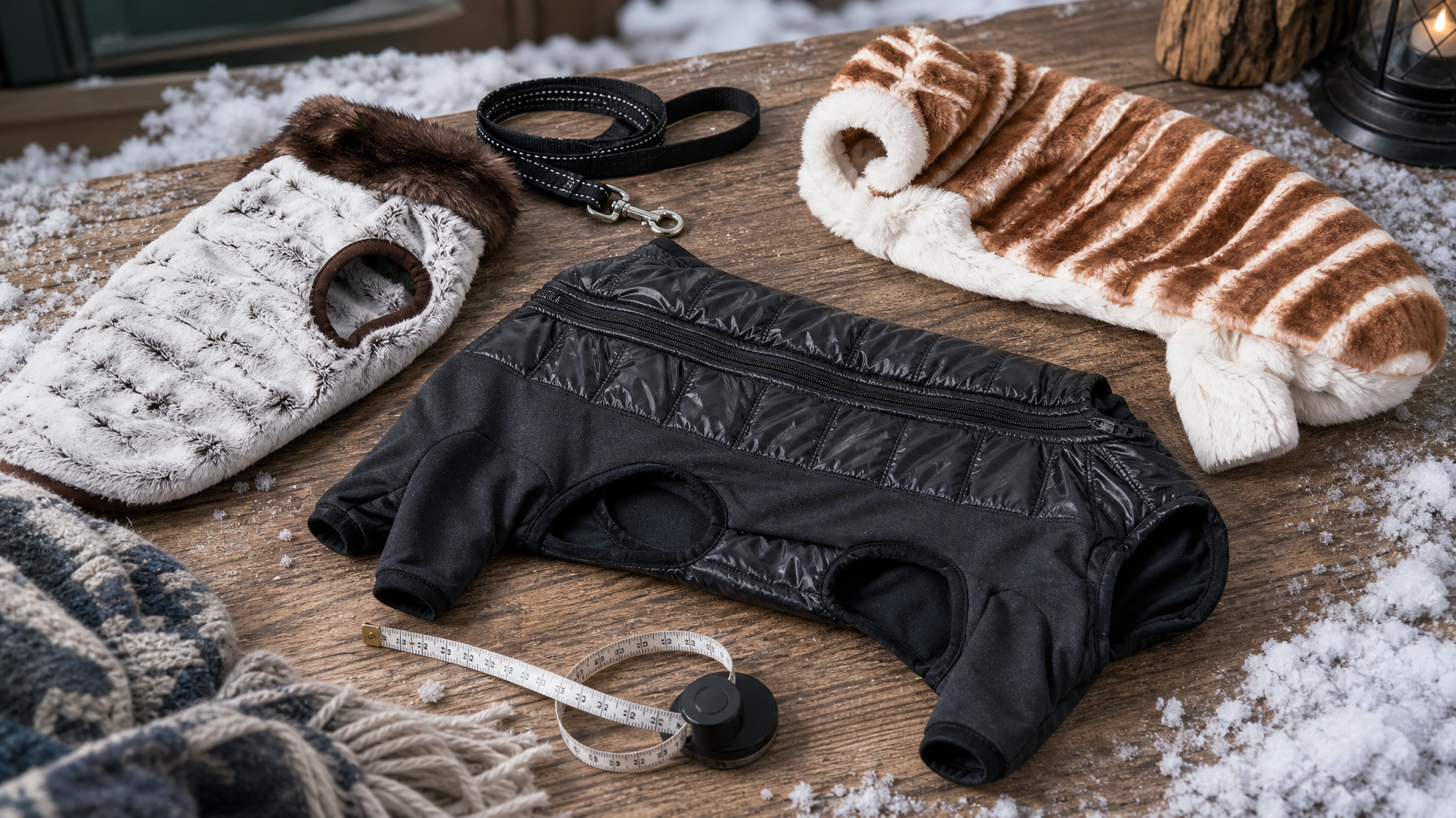
This is the coat for the small dog that hates being cold. The Pet Life ® Luxe 'Purrlage' Pelage Mink Fur Dog Coat has a plush, textured faux-fur exterior in a soft grey-and-white tonal pattern, with a contrasting darker collar that gives it a polished, layered look. Hook-and-loop belly closures make it genuinely easy to get on and off — no wrestling match required. It's designed for small to medium dogs and sits snugly along the torso, which is exactly where small dogs need the most insulation.
2. Pet Life ® Luxe 'Tira-Poochoo' Tiramisu Patterned Mink Fur Dog Coat
Same practical construction as the Purrlage, different personality. The Pet Life ® Luxe 'Tira-Poochoo' Tiramisu Patterned Mink Fur Dog Coat has a rich, warm-toned brown faux fur with a channeled, ribbed texture that gives it a cozy, quilted appearance. Hook-and-loop belly closures again, which is the right call for a coat you're putting on a wiggly dog every single day. If your small or medium dog is going to wear a coat regularly through winter, the ease of that closure system matters more than you'd think.
3. Pet Life Aura-Vent Lightweight 4-Season Stretch and Quick-Dry Full Body Dog Jacket (MD, Black)
A completely different approach. The Pet Life Aura-Vent Lightweight 4-Season Stretch and Quick-Dry Full Body Dog Jacket in Medium is a full-body suit — a quilted, glossy-finish puffer-style top half combined with stretchy, fitted leg coverage that wraps all four legs. It's built in black with a zipper running along the back for easy on and off. This is the coat for the active dog: the one doing real trail walks, playing in wet snow, or spending extended time outside in variable weather. The full-leg design also keeps road salt and mud off the belly and legs, which is its own kind of practical.
4. Pet Life Aura-Vent Lightweight 4-Season Stretch and Quick-Dry Full Body Dog Jacket (LG, Black)
The same Aura-Vent jacket in a larger size, for bigger dogs that still need full-body coverage. The Pet Life Aura-Vent Lightweight 4-Season Stretch and Quick-Dry Full Body Dog Jacket in Large carries the same quilted puffer body, four-leg coverage, and back zipper as the medium — just scaled up. Larger dogs with thin coats (Greyhounds, Vizslas, lean mixed breeds) often get overlooked in the dog coat conversation because people assume bigger means warmer. It doesn't, if the coat is sparse.
5. The Right Fit for Your Dog's Life
Think of it this way: if your dog mostly needs warmth for short outdoor trips and spends most of winter indoors, a soft faux-fur vest-style coat like the Purrlage or Tira-Poochoo is probably the better match — easy on, cozy, no fuss. If your dog is active, spends real time outside, or you live somewhere with wet winters, the Aura-Vent's full-body, quick-dry construction earns its place. You don't need both, but knowing the difference means you buy the right one the first time.
One Thing Most People Get Wrong: Fit
A coat that's too loose does almost nothing — cold air moves right through the gaps. A coat that's too tight restricts movement and causes stress. Before you buy, measure your dog's back length (base of neck to base of tail) and chest girth (the widest point behind the front legs). Most dog coat sizing charts use these two measurements, and they matter more than your dog's weight or breed name.
Also consider how the coat goes on. If you have a dog that hates getting dressed, hook-and-loop closures are significantly easier than pull-overs or button systems. If your dog is calm about it, a full-body zip-up like the Aura-Vent is no problem. Match the coat to your dog's temperament as much as their size.
The Bottom Line
Your dog doesn't need a coat because it looks cute (though that's a bonus). They need one when their body genuinely can't keep up with the cold — and for small, lean, short-coated, senior, or young dogs, that threshold arrives earlier than most owners expect. Watch your dog, not the thermometer, and you'll know.
Ready to find the right fit? Browse Petocart's dog coats and jackets — free shipping across the USA on eligible orders.
Frequently Asked Questions
At what temperature does a dog need a coat?
There's no single temperature that applies to every dog. Small, short-haired, lean, senior, or young dogs may feel uncomfortable in temperatures that a thick-coated adult dog handles easily. As a general rule, if conditions are cold enough that you're wearing a jacket and your dog fits any of the higher-risk categories (small size, thin coat, older age), it's worth putting a coat on them. Wind and wet conditions lower the effective temperature further.
Do large dogs ever need winter coats?
Yes — size alone doesn't determine whether a dog needs a coat. Large dogs with thin, single-layer coats (like Greyhounds, Vizslas, or Weimaraners) can get cold just as quickly as small dogs. If your large dog is lean and short-coated, a full-body jacket like the Pet Life Aura-Vent in Large is worth considering for extended outdoor time in cold weather.
How do I measure my dog for a coat?
Measure two things: back length (from the base of the neck to the base of the tail) and chest girth (the widest point around the chest, just behind the front legs). These two measurements are what most dog coat size charts are based on. Weight and breed are rough guides at best — actual body measurements give you a much more reliable fit.
What's the difference between a dog vest and a full-body dog jacket?
A vest or torso coat covers the back and belly but leaves the legs exposed — it's easier to put on and works well for short outdoor trips or dogs that mainly need core warmth. A full-body jacket like the Pet Life Aura-Vent covers the torso and all four legs, which is better for active dogs spending extended time outside, or for wet and snowy conditions where leg coverage helps keep your dog dry and clean.