Cart
0
Most dog owners brush their dog right before a bath, or when the shedding gets bad enough to notice it on the couch cushions. That's not really a grooming routine — that's crisis management. And by the time you're pulling mats out of a Golden Retriever's chest or vacuuming tumbleweeds of Husky fur off the rug, you've already let things go further than you should have.
The good news: brushing doesn't have to be a big production. A few minutes on the right schedule, with the right tool for your dog's coat, keeps everything manageable — and your dog actually starts to enjoy it.
Why Coat Type Is the Only Thing That Actually Matters Here
"Brush your dog regularly" is advice that means nothing without context. A French Bulldog and a Bernese Mountain Dog are both dogs. One needs a quick once-over every week or two; the other needs daily attention during shedding season or you'll be pulling out dense, felted mats. The coat type — not the breed name, not the dog's size — tells you everything about brushing frequency.
Here's how to think about the four main coat categories, and what each one actually demands from you.
Short, Smooth Coats (Beagles, Boxers, Dachshunds)
Short-coated dogs are the low-maintenance end of the spectrum, but "low maintenance" doesn't mean zero maintenance. These coats shed steadily year-round, and without occasional brushing, dead hair builds up close to the skin and dull the coat's natural sheen.
Schedule: Once a week, with a quick once-over during heavy shedding seasons (spring and fall).
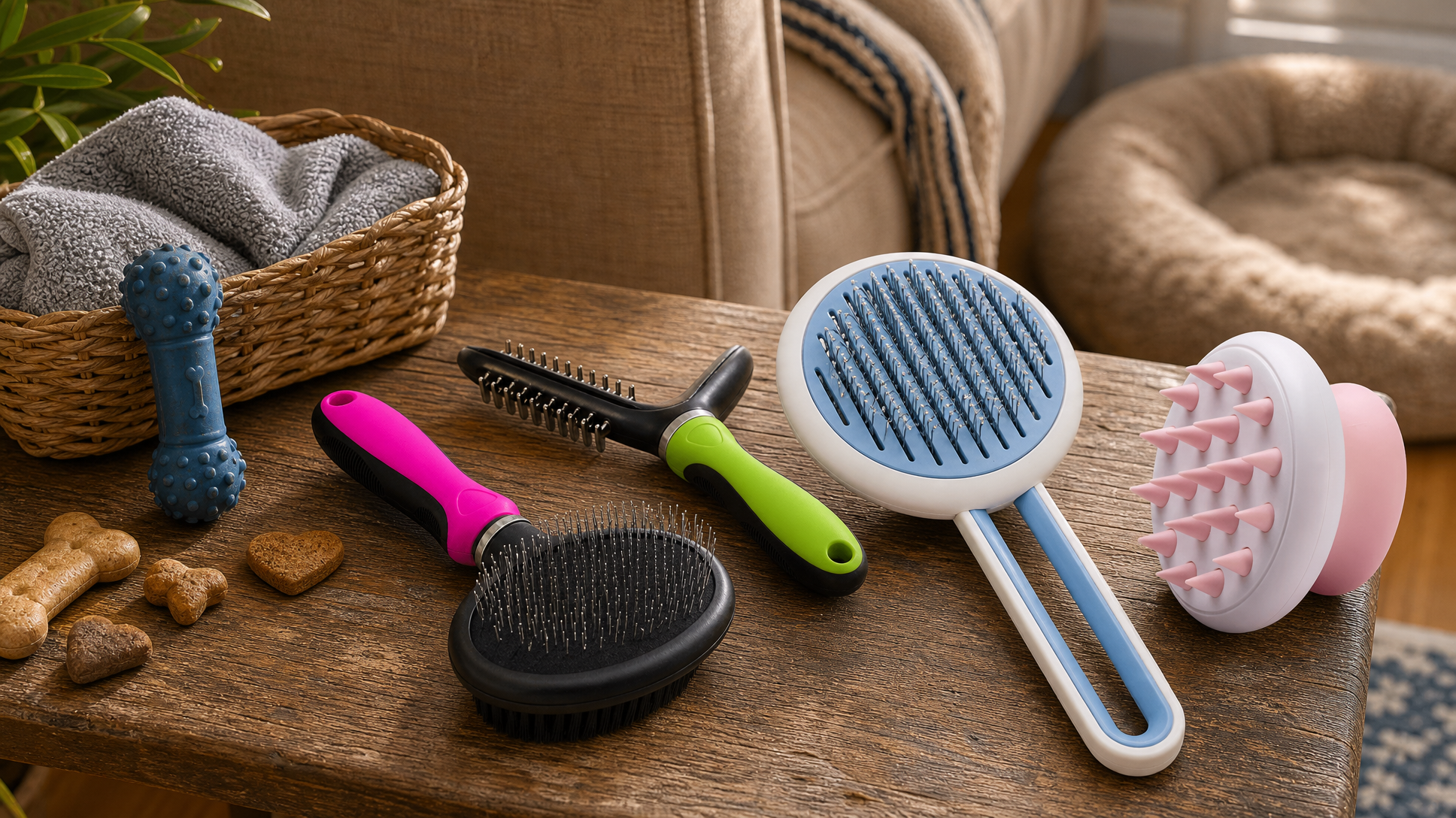
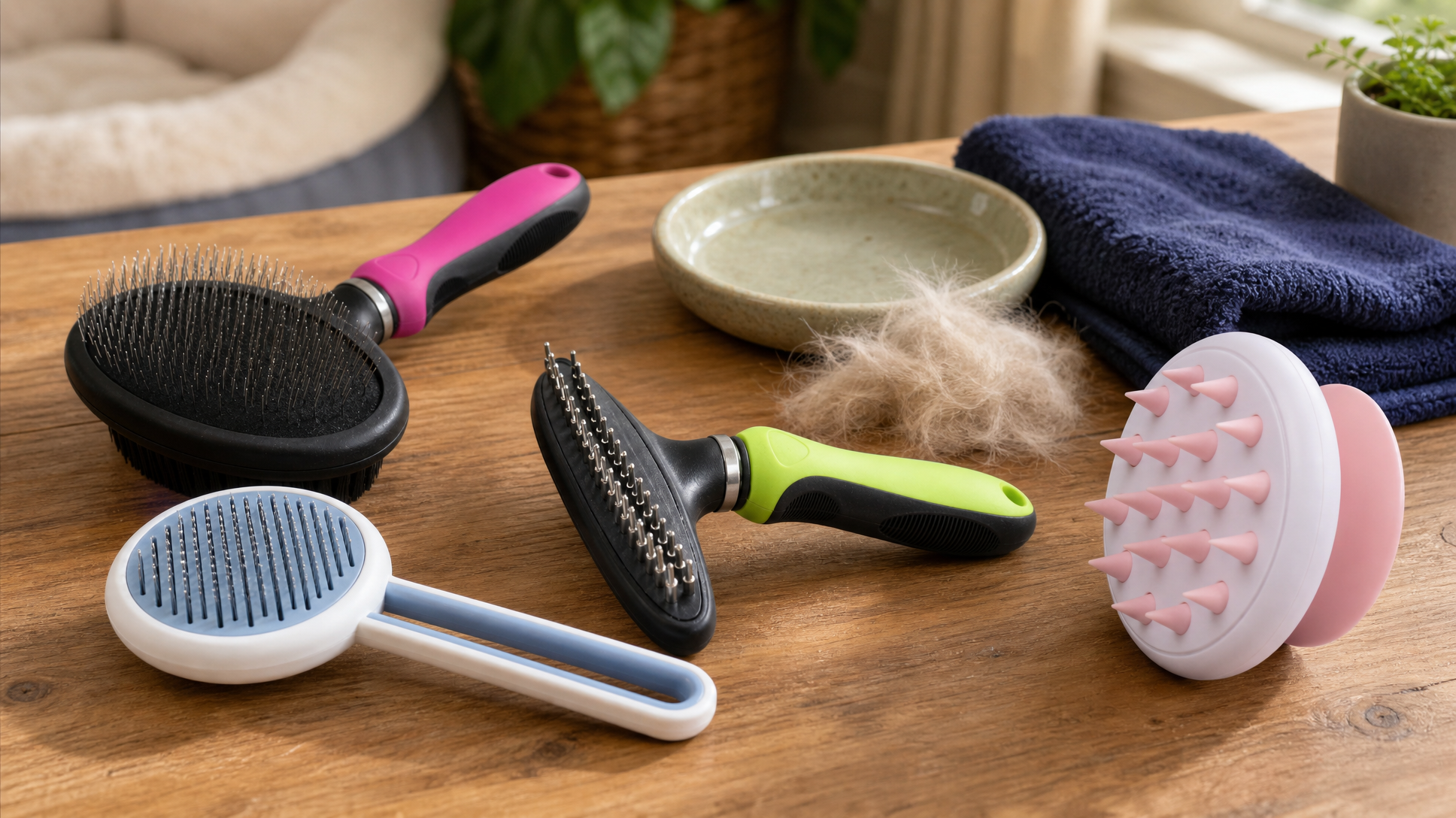
The right tool here is a bristle brush — something that sweeps loose hair off the surface and distributes the skin's natural oils without being too aggressive on a coat with no undercoat to speak of. The Pet Life ® Flex Series 2-in-1 Dual-Sided Slicker and Bristle Grooming Pet Brush works well for this: the bristle side handles smooth coats gently, and if your short-coated dog has any areas with slightly coarser texture, you can flip to the slicker side without grabbing a second tool. The brush itself has a pink and black ergonomic handle that makes it comfortable to hold through a full session.
Medium-Length Coats (Cocker Spaniels, Border Collies, Australian Shepherds)
Medium coats are where most owners get caught off guard. The coat looks manageable — it's not as dramatic as a Collie's full mane — but it's long enough to tangle, especially around the ears, collar line, and legs. Leave it two weeks without brushing and you'll find small knots forming at the friction points.
Schedule: Two to three times a week. During shedding season, bump that to every other day.
For medium coats, you want a tool that can get through the topcoat and address what's building up underneath. The dual-sided slicker and bristle brush handles the surface layer, but for dogs with any density to their coat, the Pet Life ® Flex Series Dual-Row Grooming Rake Pet Comb is what actually does the work. Its rows of rounded metal tines are built to move through denser fur and pull out the loose undercoat that a bristle brush simply can't reach. The rake has a green and black ergonomic handle and a wide, oval head — it covers ground efficiently without you having to go over the same patch repeatedly.
Long Coats (Shih Tzus, Maltese, Yorkshire Terriers, Afghan Hounds)
Long-coated dogs need daily brushing. That's not an exaggeration — it's just the reality of managing a coat that grows continuously and tangles easily. Skip a few days and you'll find small mats forming; skip a week and those mats tighten into dense clumps that can pull at the skin and trap moisture. At that point, brushing alone won't fix it and you're looking at a professional groomer with a de-matting comb.
Schedule: Daily, or at minimum every other day.
The Pet Life ® 'Concepto' Modern Bristle Grooming Pet Deshedder Comb is worth having in your daily routine for long coats. Its round white and light-blue head is fitted with rows of fine wire pins tipped with small beads — the kind of design that moves through long hair without scratching the skin underneath. The open-slot design of the head also makes it easier to clear collected hair as you go, which matters when you're brushing every single day and don't want the session to drag on.
For long-coated dogs, technique matters as much as frequency. Work in sections, start at the ends of the coat and move toward the skin (not the other way around), and pay extra attention to the areas that mat first — behind the ears, under the armpits, and around the collar.
Double Coats (Huskies, German Shepherds, Golden Retrievers, Labrador Retrievers)
Double-coated dogs have a soft, dense undercoat beneath a coarser topcoat, and during their twice-yearly "blowing" season, that undercoat comes out in volumes that seem physically impossible. Owners of Huskies know this intimately. Outside of shedding season, the coat is relatively stable — but it still needs regular attention to prevent the undercoat from compacting and trapping heat against the skin.
Schedule: Two to three times a week year-round; daily during shedding season.
This is where the Pet Life ® Flex Series Dual-Row Grooming Rake Pet Comb really earns its place. The dual-row tine layout is specifically useful for dense double coats because it reaches past the topcoat and loosens the undercoat rather than just gliding over the surface. Pair it with the slicker side of the dual-sided brush to finish the session and smooth the topcoat flat.
One important note for double-coated breeds: never shave them down to manage shedding. The double coat actually insulates against both heat and cold, and shaving can permanently damage the coat's texture and growth pattern. Brushing is the correct answer, not the clipper.
Bath Days Are Different — Don't Skip the Brushing Before and After
Brushing before a bath removes tangles that would tighten into mats the moment they get wet. Brushing after a bath (once the coat is fully dry) removes the loose hair that the water loosened but didn't wash away. Both steps matter.
For bath-time grooming, especially if your dog has a sensitive scalp or tends to be anxious about bathing, the Pet Life ® 'Scwubba' Handheld Bathing Brushing and Massaging Soft Flexible Grooming Pet Comb is a practical addition. It's a round, palm-sized tool with soft silicone nubs — white body, pink nubs — designed to work shampoo into the coat while massaging the skin. It doesn't replace a pin or slicker brush for detangling, but for dogs who are tense in the tub, the massaging action during the wash can make the whole experience noticeably calmer.
What Actually Happens When You Skip Brushing Too Long
It's not just about appearance. When loose dead hair isn't removed regularly, it compacts against the skin and traps moisture — which creates the warm, damp conditions that bacteria and yeast thrive in. Mats pull at the skin constantly, causing low-grade discomfort your dog can't tell you about. And a coat that's never properly maintained becomes harder and harder to brush out, which makes grooming sessions stressful for both of you.
Regular brushing is also one of the few times you're running your hands systematically over your dog's entire body. You'll notice lumps, skin irritation, ticks, or cuts that you'd otherwise miss. It's a health check disguised as a chore.
Browse the full best-selling grooming tools at Petocart and find the right brush for your dog's coat — with free shipping across the USA on eligible orders.
Frequently Asked Questions
Can I use the same brush for both my short-coated and long-coated dogs?
A dual-sided brush like the Pet Life Flex Series 2-in-1 gives you flexibility — the bristle side works well on short, smooth coats while the slicker side handles longer or coarser fur. That said, very long or dense double coats will still benefit from a dedicated rake or deshedding comb to properly reach the undercoat. One brush can cover multiple dogs if their coat types aren't too far apart, but you may need more than one tool for very different coats.
My dog hates being brushed. How do I make it easier?
Short, frequent sessions work better than long, infrequent ones — especially for dogs that are brush-averse. Start with just a minute or two, focus on areas your dog doesn't mind (usually the back), and work toward more sensitive spots over time. Using a softer tool like the Scwubba during bath time can help build a positive association with being handled. The goal is to make brushing unremarkable, not something your dog braces for.
How do I know if my dog has a double coat?
Part the fur and look at what's underneath the outer layer. If you see a soft, dense, woolly underlayer beneath the coarser topcoat, your dog is double-coated. Breeds like Huskies, German Shepherds, Golden Retrievers, and Labrador Retrievers are classic examples. Double-coated dogs shed noticeably more during spring and fall as the undercoat blows out, which is usually the moment owners realize they've been under-brushing.
Is it okay to brush a dog every day even if they don't need it?
Yes, as long as you're using the right tool and not pressing too hard. Daily brushing with a gentle bristle brush is perfectly fine for most coats and many dogs come to enjoy the routine. Where you can overdo it is with aggressive slicker brushes used with heavy pressure on the same spot repeatedly — that can cause mild skin irritation sometimes called "slicker burn." Light, consistent sessions with appropriate tools are always better than infrequent, forceful ones.