Cart
0
You've probably seen someone walking their dog in boots and wondered if that was really necessary — or, more recently, you've touched summer asphalt yourself and suddenly understood the point completely. Pavement absorbs and holds heat in a way grass never does, and on a bright afternoon it can get significantly hotter than the air temperature. Your dog's paw pads are tough, but they're not invincible.
Before you dismiss boots as overkill or panic-buy four pairs, here's what actually matters.
The Simple Pavement Test
Press the back of your hand flat on the pavement and hold it there for seven seconds. If you can't keep it there comfortably, the surface is too hot for your dog's bare paws. This isn't a perfect science, but it's a reliable enough field check that most vets and trainers recommend it. You don't need a thermometer — your own comfort is the signal.
Asphalt in direct sun on a warm afternoon can reach temperatures well above the ambient air, which means a day that feels manageable to you can still be dangerous underfoot for your dog. Concrete tends to run a bit cooler than asphalt, but it still heats up considerably.
Which Dogs Are Most at Risk
Any dog can get burned paws on hot pavement, but a few groups are especially vulnerable:
- Small and toy breeds — they're lower to the ground, so they absorb radiant heat from the surface more intensely, and they can't cover ground as quickly to get off hot pavement.
- Senior dogs — older dogs may have thinner, less resilient paw pads and may not react as quickly when something is uncomfortable.
- Dogs new to warm climates or summer walking — paw pads toughen up with regular use on varied surfaces. A dog that's been mostly indoors or on grass all winter has softer pads.
- Dogs with existing paw issues — cracked pads, allergies, or post-surgical sensitivity all lower the threshold for damage.
That said, even a healthy, active dog with well-conditioned pads can sustain burns on genuinely scorching pavement. The risk is real across the board.
What to Look for in a Dog Boot That Actually Stays On
The biggest complaint owners have with dog boots isn't that their dog refuses to wear them — it's that the boots fall off after half a block. A boot that stays on has a few things going for it: a secure adjustable strap or closure above the ankle, a sole with enough grip to prevent the boot from twisting, and a fit that's snug without cutting off circulation. Measure your dog's paw width at its widest point and go by the brand's sizing chart rather than guessing by breed.
The break-in period is real. Most dogs walk strangely in boots for the first few outings — high-stepping, shaking their feet, refusing to move. That's normal. Start indoors for short sessions before expecting your dog to walk a full block in them.
Boots as Part of a Bigger Warm-Weather Plan
Paw protection is one piece of a broader summer routine. Hot weather also means sudden rain showers, higher humidity, and the kind of afternoon walks that leave a dog soaked and uncomfortable by the time you're home. That's where a good raincoat earns its place — not just for aesthetics, but for keeping your dog dry and easier to towel off when you get back inside.
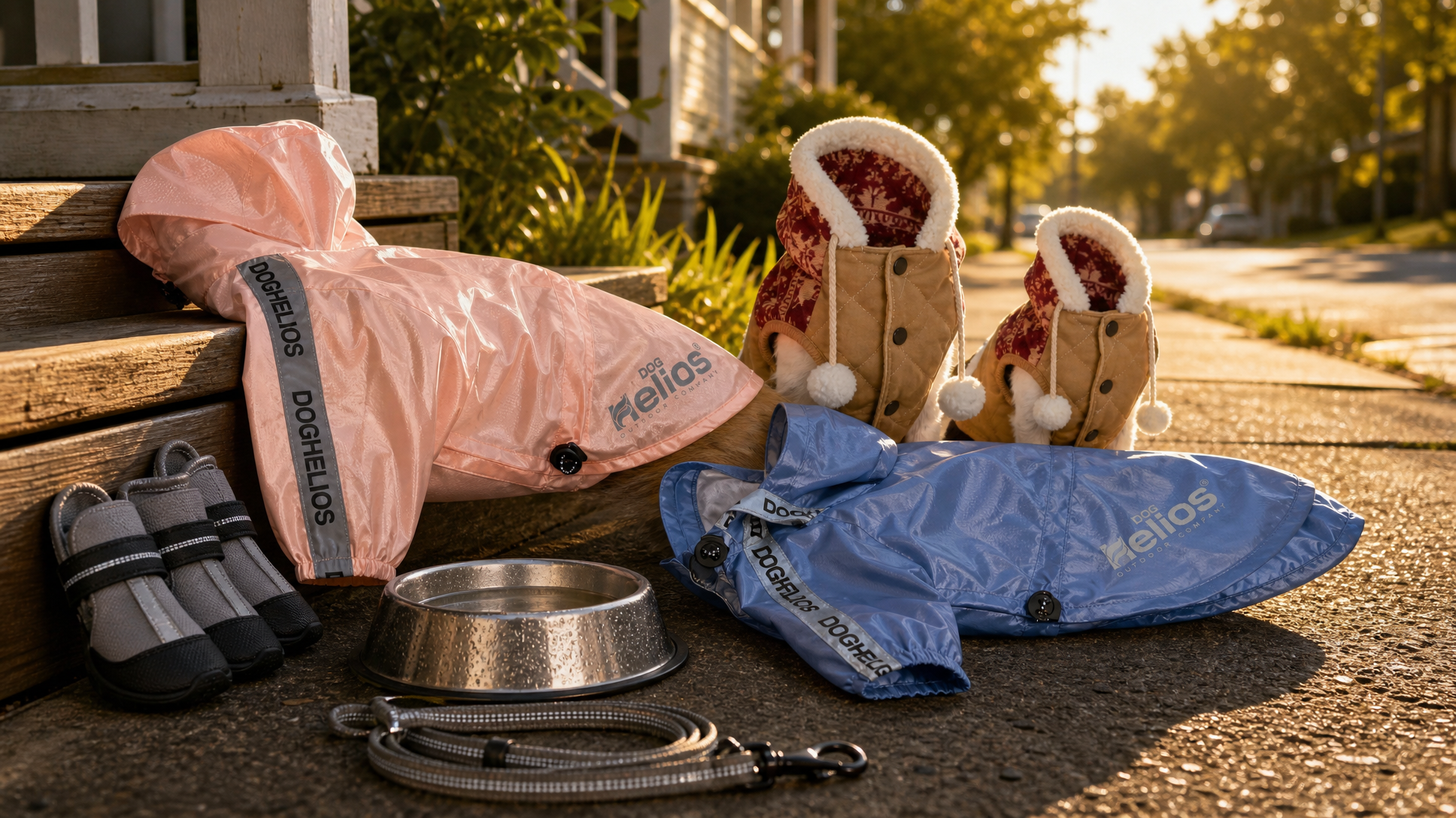
The Dog Helios Torrential Shield Adjustable and Waterproof Dog Raincoat Poncho is a practical option here. The pink version (XL) and the blue version (LG) both feature a lightweight shell in a ripstop-style fabric, a branded reflective strip running down the front — useful for low-light evening walks — and snap closures that let you adjust the fit around the chest. The design covers the back and sides without restricting leg movement, so your dog can still move naturally on a walk. These are purpose-built for real weather, not just a drizzle.
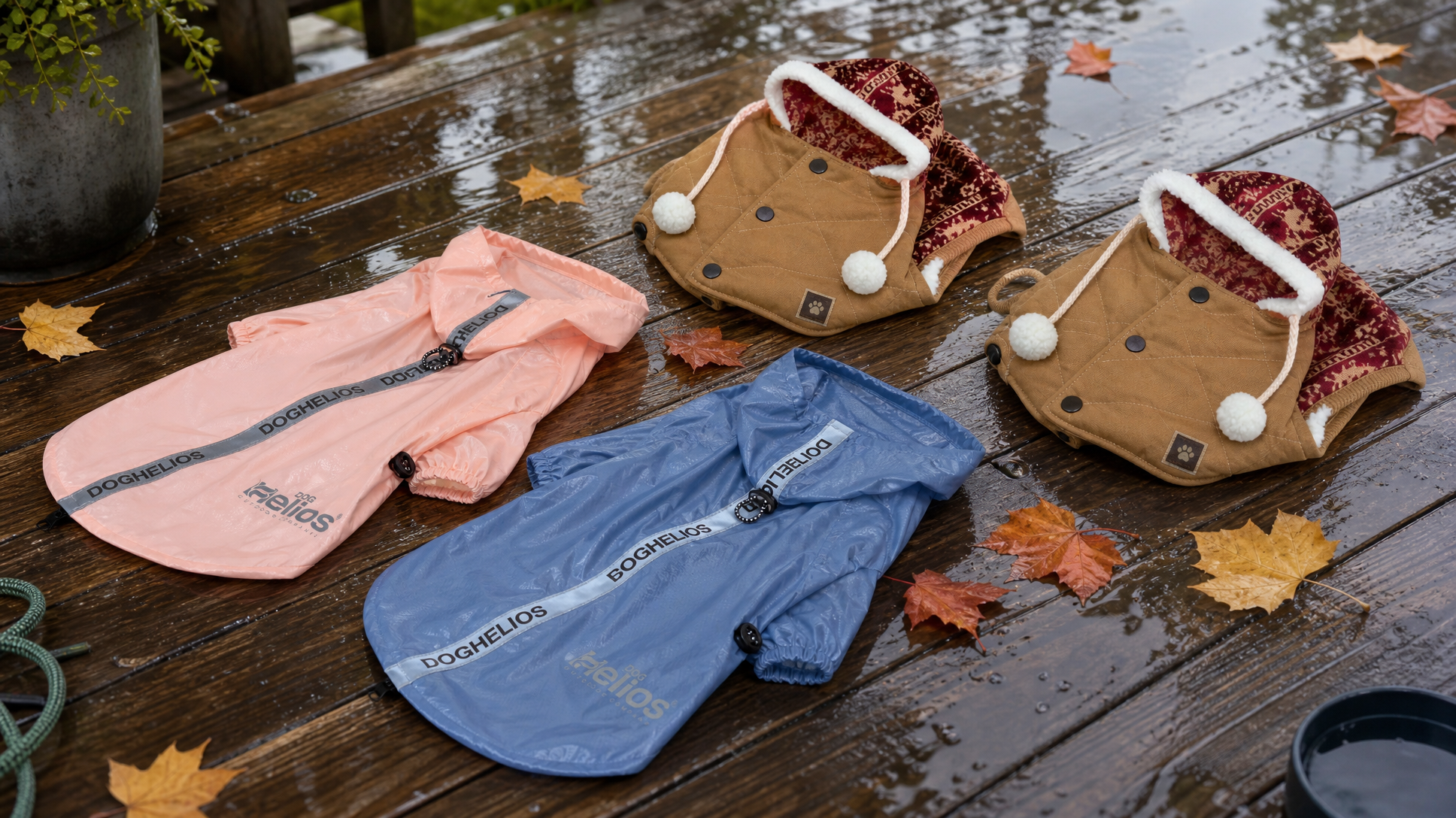
For cooler summer mornings or early fall, when the air has a bite but it's not yet full winter, a layered jacket makes more sense than a heavy coat. The TOUCHDOG 'Snowadayz' Pom Pom Fashion Designer Pet Dog Coat Hooded Sweater Jacket Hoodie — available in Large and X-Large, both in a Red/Beige colorway — takes a different approach entirely. The outer shell has a quilted tan finish with button closures, and the attached hood is lined in cream sherpa with a red patterned interior and dangling pom pom ties. It's a genuinely cozy piece for the shoulder seasons when a raincoat would be too light and a puffer would be too much.
The point isn't to dress your dog for the sake of it. It's to match the gear to the conditions — rain gear for wet days, a warm jacket for cold mornings, and boots for hot pavement or rough terrain. Each has a specific job.
When Boots Aren't the Answer
If the pavement passes the seven-second hand test, your dog probably doesn't need boots for that walk. Boots add friction and warmth, which can become their own problem on a genuinely hot day. In that case, the better move is simply to walk earlier in the morning or later in the evening when surfaces have cooled, stick to grass and shaded paths, and keep the outing shorter.
Boots are most valuable for: very hot pavement mid-day, rough or rocky trails, post-paw-injury recovery, and winter salt and ice. They're not a substitute for good judgment about when to walk.
Ready to get your dog's warm-weather kit sorted? Browse the Active Dog Shop at Petocart for raincoats, jackets, and accessories — with free shipping across the USA.
Frequently Asked Questions
How hot does pavement need to be before it can burn a dog's paws?
Pavement doesn't need to feel scorching to cause damage. The general guidance is to use the seven-second hand test: press the back of your hand to the surface. If you can't hold it there comfortably for seven seconds, it's too hot for your dog's bare pads. Asphalt in direct afternoon sun can reach temperatures far above the air temperature, so a warm but not extreme day can still produce a dangerous surface.
How do I get my dog used to wearing boots without a meltdown?
Start indoors and keep the first sessions very short — just a few minutes. Let your dog sniff the boots before putting them on, and reward calmly throughout. Most dogs go through a high-stepping or freeze phase that fades with repetition. Consistency over several days is more effective than one long frustrated session.
Does my dog need a raincoat, or is toweling off after a walk enough?
For short-coated dogs, toweling off is usually fine. For dogs with dense, long, or double coats, a raincoat genuinely reduces the amount of water that soaks into the undercoat — which takes much longer to dry and can cause skin irritation or a persistent damp smell. A lightweight waterproof poncho like the Dog Helios Torrential Shield keeps the bulk of the coat dry and makes post-walk cleanup much faster.
Is a hooded dog jacket like the Snowadayz warm enough for winter, or just fall?
The TOUCHDOG Snowadayz is best suited to cool-weather shoulder seasons — crisp fall mornings, mild winter days, or early spring outings. It's a layered, quilted design with a sherpa-lined hood, so it provides genuine warmth, but for very cold or wet winter conditions a heavier insulated or waterproof coat would be a better fit. Think of it as your dog's stylish mid-layer rather than a heavy-duty winter parka.