Cart
0
How Mental Stimulation and Training Games Boost Your Indoor Pet’s Well-Being
**Keeping your indoor pet happy and healthy goes beyond food and rest. Engaging their minds with mental stimulation and fun training games enhances behavior, reduces anxiety, and strengthens your relationship. Discover practical activities to enrich your dog or cat’s indoor life.**
Key Takeaways
- Mental stimulation is as vital as physical exercise for indoor pets to prevent boredom and destructive behaviors.
- Interactive training games using treats and toys build cognitive skills, confidence, and impulse control.
- Rotating toys, DIY enrichment projects, and safe zones contribute to a balanced indoor environment.
- Managing treat intake maintains a healthy weight during enrichment activities.
- Long-term enrichment supports cognitive health, emotional balance, and a stronger pet-owner bond.
Table of Contents
- 1. Why Mental Stimulation is Key for Indoor Pets
- 2. Interactive Training Games Using Treats and Toys
- 3. Indoor Enrichment Ideas: Keeping Pets Happy and Healthy
- 4. Managing Treats and Calories During Enrichment
- 5. The Long-Term Benefits of Enrichment and Training
- 6. Conclusion: Make Every Day Enriching for Your Indoor Pet
- FAQ
1. Why Mental Stimulation is Key for Indoor Pets
Indoor pets need more than physical activity — their minds require engaging challenges to stay sharp and happy. Pets confined indoors can develop boredom-driven behaviors like chewing, barking, or scratching. Mental stimulation helps alleviate these issues by offering purposeful outlets.
Benefits of Mental Stimulation for Dogs and Cats
- Curbing destructive behavior: Redirects pent-up energy from negative outlets to creative problem-solving activities.
- Supporting cognitive health: Keeps their thinking skills sharp and may slow cognitive decline with age.
- Deepening your connection: Shared mental tasks build trust and improve your communication with your pet.
- Enhancing emotional well-being: Purposeful tasks reduce anxiety and satisfy instincts like foraging or hunting.
Experts agree that enrichment is essential alongside physical exercise. Activities such as scent tracking stimulate natural behaviors and keep pets happy. For a comprehensive look, read more in this overview of the benefits of pet enrichment.
2. Interactive Training Games Using Treats and Toys
Combining treats and toys with interactive games creates a stimulating environment that positively reinforces learning and good behavior. These games engage your pet’s curiosity and encourage problem-solving.
Celebrate the season with savings — get 5% off your order using code EXCLUSIVE5 at checkoutc
Popular Indoor Training Games
- Hide-and-Seek: Hide and call your pet to find you, encouraging tracking for dogs and playful chasing for cats.
- “Find It” Scent Games: Hide treats around the room for your pet to discover using their nose, boosting mental and sensory skills.
- Treat-Dispensing Puzzle Toys: Challenge your pet to solve puzzles that unlock food rewards, promoting problem-solving and slowing mealtimes.
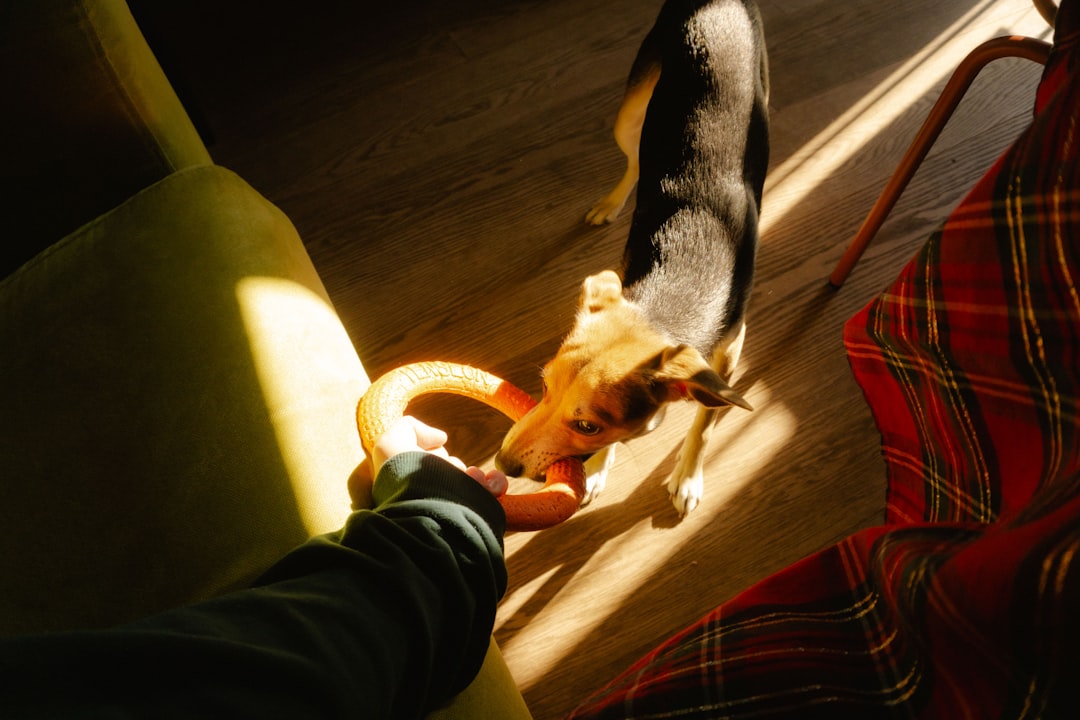
- Tug Games with Commands: Teach commands like “take it” and “drop it” during tug-of-war, enhancing impulse control and respect for boundaries.
- Trick Training Sessions: Use brief, focused training to teach commands such as “sit,” “spin,” or agility skills.
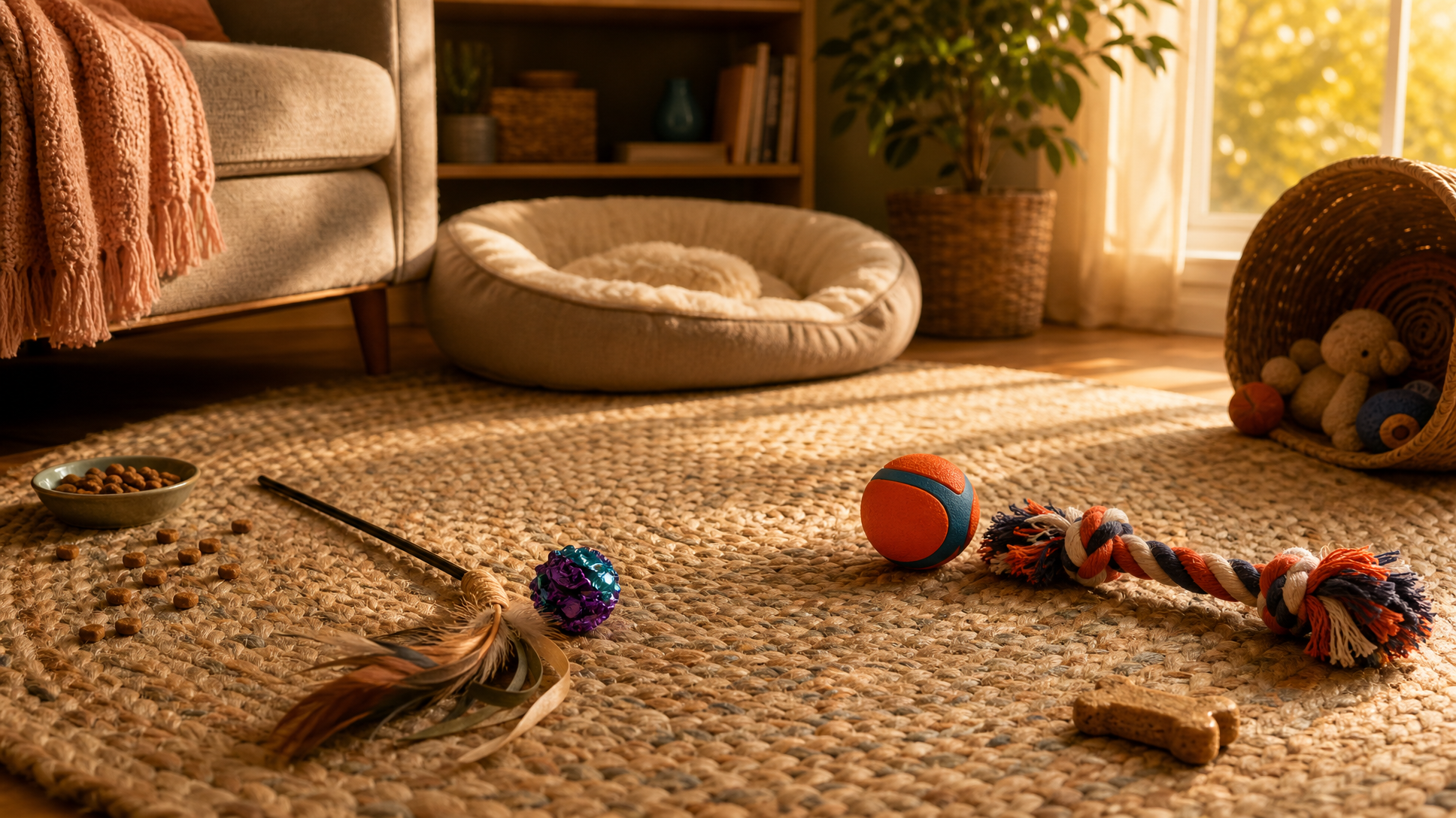
- For Cats: Wand Teasers and Chase Toys: Stimulate hunting instincts to keep cats mentally and physically active.
These games reduce anxiety, increase focus, and prepare pets for new experiences. Learn more ideas in these training games for pets.
Tips for Reward-Based Training
- Use treats your pet loves but keep quantities small to manage calories.
- Keep sessions brief and consistent, ideally 5 to 10 minutes multiple times daily.
- Practice patience and reinforce positive behaviors reliably.
- Rotate toys frequently to maintain interest and prevent boredom.
3. Indoor Enrichment Ideas: Keeping Pets Happy and Healthy
When outdoor time is limited, indoor enrichment keeps pets engaged both mentally and physically using simple, creative methods.
Rotate Toys and Games Regularly
- Swap puzzle feeders, chew toys, and squeaky toys on a weekly rotation.
- Alternate wand teasers, toy mice, and crinkle balls to keep cats interested.
- Add new scents or textures to existing toys to renew curiosity.
This approach helps prevent boredom behaviors like pacing or destructive chewing. Discover more in Pet Central’s guide to puzzle toys.
DIY Enrichment Toys and Games
- Treat-Filled Cardboard Tubes: Stuff a toilet paper tube with kibble and fold ends for your pet to unlock.
- Towel-Based Foraging Mats: Roll up treats in towels or scatter kibble on fleece mats for a scent-hunting challenge.
- Kibble Bottles: Fill a plastic bottle with dry food and drill small holes—pets learn to roll and earn their kibble.
- Homemade Obstacle Courses: Use household items to build tunnels, jumps, or weaving paths to stimulate physical activity and mental focus.
Find a full list of these ideas at Purina’s indoor play ideas.
Create a Safe Spot for Stress Relief
- Choose a quiet, low-traffic area and add your pet’s favorite bedding or crate.
- Include comforting items such as toys or items carrying your scent.
- Encourage your pet to use this space during stressful events like storms or gatherings.
- Respect their need for uninterrupted rest to prevent overstimulation.
This sanctuary supports emotional well-being and stress management. Learn how to set up a calming zone in this guide to creating a safe spot.
4. Managing Treats and Calories During Enrichment
Treats are a wonderful training aid but can easily lead to overfeeding, especially indoors when exercise is limited. Thoughtful treat management helps maintain a healthy weight and prevents obesity-related problems.
- Use small treats or break larger ones into tiny bits.
- Incorporate your pet’s regular kibble ration into enrichment activities instead of adding extra food.
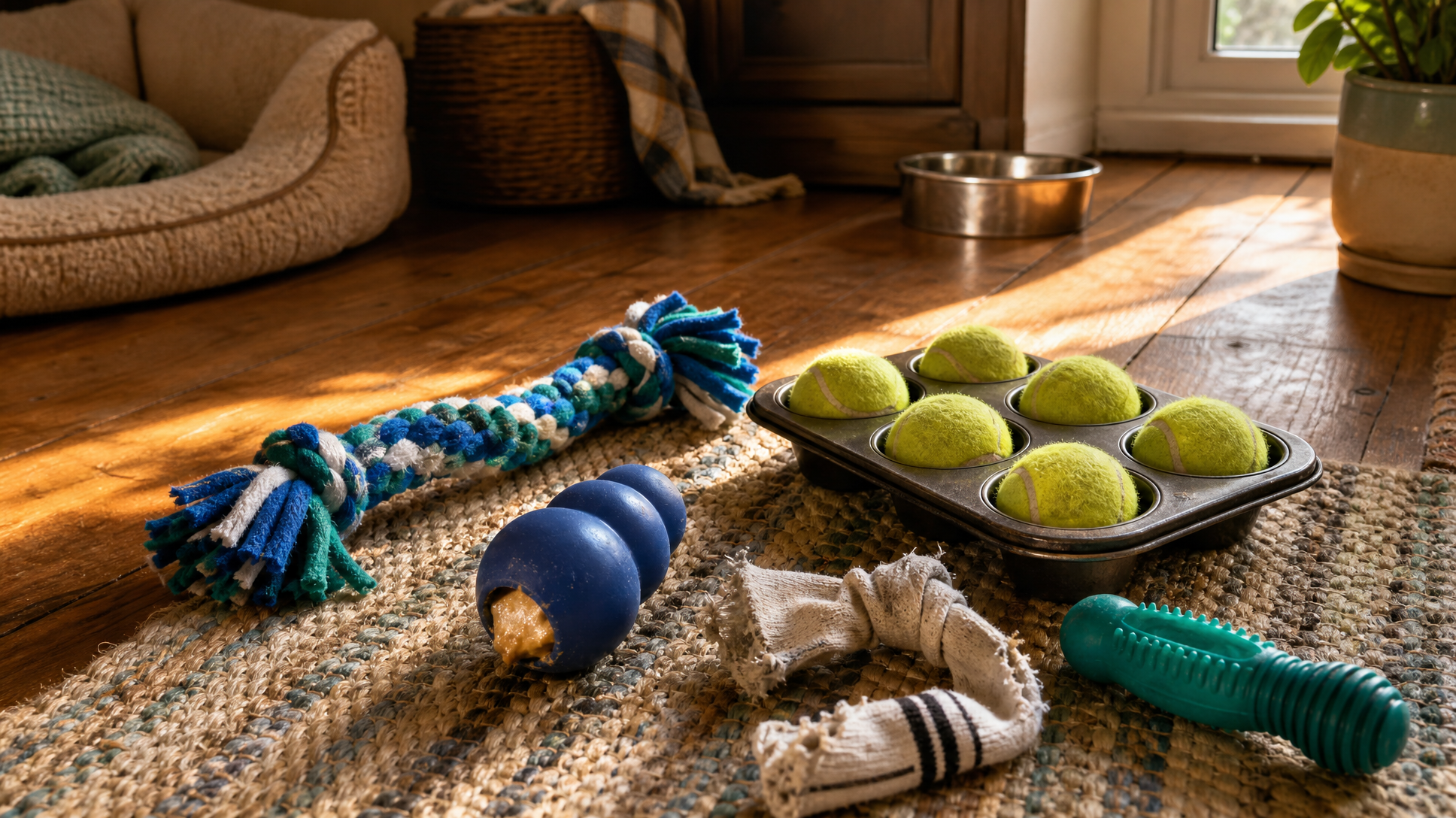
- Opt for low-calorie treats or stuff toys like Kongs with frozen peanut butter for long-lasting rewards.
- Adjust daily meal portions according to treat intake.
- Regularly weigh your pet and consult your vet if you notice any weight changes.
Smart treat management helps your pet stay fit and healthy while enjoying enrichment.
5. The Long-Term Benefits of Enrichment and Training
Enrichment and training provide far-reaching advantages, improving more than just daily entertainment.
Behavioral Improvements
- Reduced stress and anxiety-driven behaviors.
- Less destructive chewing, excessive barking, or scratching.
- Enhanced impulse control and focus.
- Increased confidence in new or unfamiliar situations.
Cognitive and Physical Health Gains
- Slower cognitive decline with aging.
- Maintained physical activity to manage weight effectively.
- Improved overall health through consistent mental and physical engagement.
Strengthened Human-Pet Bond
- More frequent, positive interactions build mutual trust.
- Training improves two-way communication.
- Shared routines enhance happiness for both pets and owners.
Enrichment is an essential part of loving, responsible pet care. For expert insights, explore this guide to enrichment’s benefits.
6. Conclusion: Make Every Day Enriching for Your Indoor Pet
Indoor living doesn’t have to limit your pet’s joy or well-being. By incorporating mental stimulation and training games into your daily routine, you can support a more balanced, confident, and content companion. Rotate toys often, use treats thoughtfully, and harness everyday household items to create enriching challenges that strengthen your bond.
Try these ideas today, celebrate your pet’s progress, and enjoy the rewarding experience of watching them thrive indoors.
FAQ
Q: How often should I rotate my pet’s toys?
Rotate toys weekly or every few days to maintain novelty and prevent boredom.
Q: Can mental stimulation replace physical exercise?
Mental stimulation complements but does not replace physical exercise; both are important for your pet’s health.
Q: What treats are best for training indoor pets?
Choose small, low-calorie treats that your pet finds irresistible and can be fed in moderation to avoid weight gain.
Q: How do I create a safe spot for my pet?
Find a quiet, low-traffic area with comfortable bedding and familiar items. Encourage your pet to retreat there during stressful times and avoid disturbing them when resting.