Cart
0
The raw feeding debate is loud — and not always helpful
Search "raw dog food diet" and you'll find two camps: people who swear it cured every ailment their dog ever had, and veterinary organizations warning it's a contamination risk you should avoid entirely. Both sides have a point. Neither gives you the full picture you need to actually decide.
This post isn't here to convert you. It's here to walk you through the real tradeoffs — cost, prep time, nutritional completeness, food-safety handling — so you can make a decision that fits your dog, your household, and your lifestyle, not someone else's conviction.
What a raw diet actually is
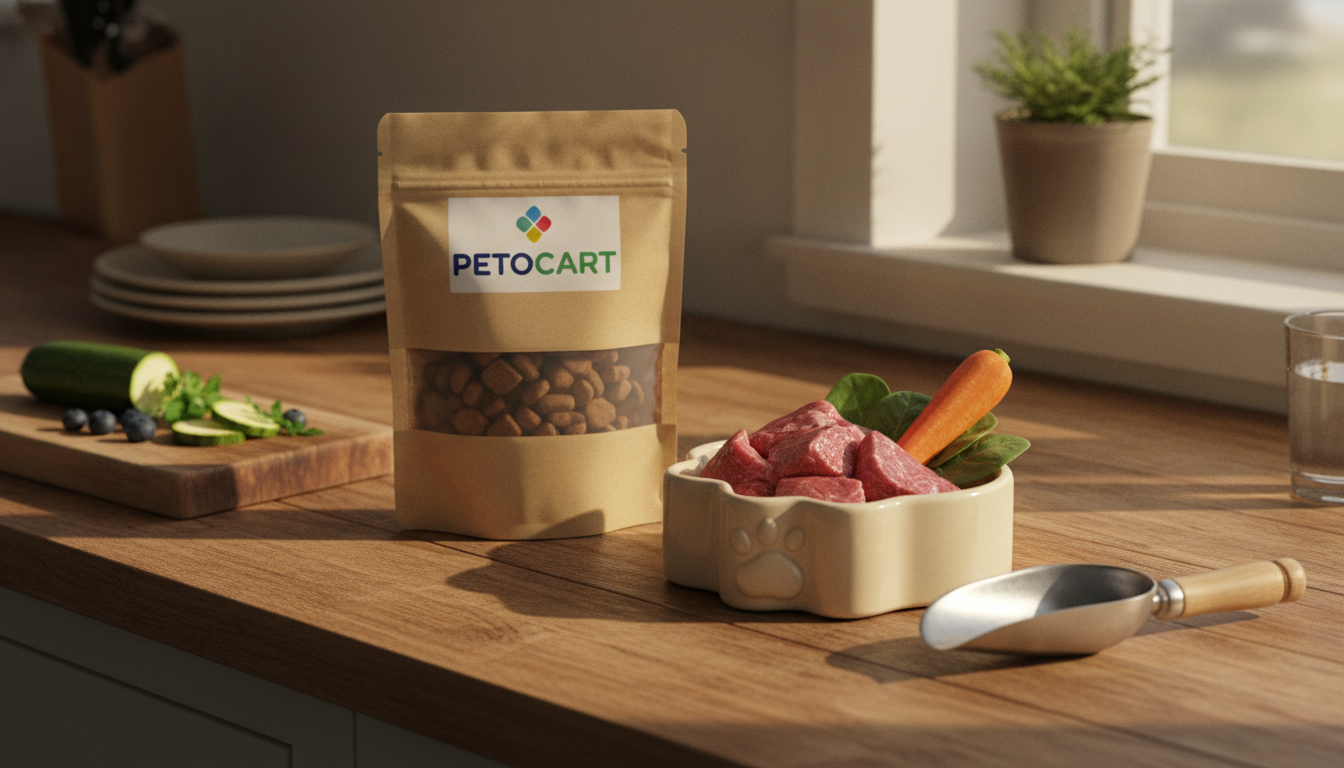
A raw dog food diet typically means feeding uncooked muscle meat, organ meat, raw meaty bones, and sometimes fruits, vegetables, and eggs. There are two broad approaches: commercially prepared raw food (frozen or freeze-dried patties and mixes sold ready to serve) and home-prepared raw, where you source and balance the ingredients yourself. These two are very different in terms of effort, cost, and nutritional reliability — and that distinction matters a lot for the pros and cons below.
The genuine upsides
Ingredient transparency. With a commercially prepared raw diet or a carefully sourced home recipe, you know exactly what's going into your dog's bowl. For owners whose dogs have struggled with mystery reactions to heavily processed food, that clarity is genuinely valuable.
High moisture content. Raw meat is naturally high in moisture, which supports hydration — something dry kibble can't offer. Dogs who don't drink enough water on their own may benefit from the extra fluid in every meal.
Palatability. Most dogs find raw food extremely appealing. If you have a picky eater who turns their nose up at kibble, raw often solves that problem immediately.
Minimal processing. Raw food skips the high-heat extrusion process used to make kibble. Whether that meaningfully preserves more nutrients is still debated in veterinary nutrition research, but it does mean fewer added synthetic preservatives in many formulations.
The real downsides — and they're worth taking seriously
Food safety is not optional. Raw meat carries bacteria — Salmonella, Listeria, and E. coli among them. This is a documented risk, not a myth. It affects not just your dog but your household: contaminated surfaces, bowls, and your dog's saliva can expose family members, especially children, elderly people, and anyone immunocompromised. Strict handling protocols (dedicated prep surfaces, thorough handwashing, careful bowl sanitation) are non-negotiable, not just recommended.
Nutritional completeness is harder than it looks. This is the biggest practical trap with home-prepared raw diets. Meat alone is not a complete diet. Getting the calcium-to-phosphorus ratio right, ensuring adequate vitamins and trace minerals, and avoiding toxicity from too much liver takes real knowledge — or a recipe formulated by a board-certified veterinary nutritionist. Many home-prepared raw diets studied have been found to be nutritionally unbalanced. Commercially prepared raw foods that meet AAFCO standards are a safer starting point if you go this route.
Cost adds up quickly. Quality raw food — especially commercially prepared, AAFCO-compliant options — is significantly more expensive than most kibble, often by a substantial margin for large or giant breeds. That's not a dealbreaker, but it's a budget reality you should map out before you start.
Bones carry risk. Raw meaty bones are often included for dental benefit and calcium, but they can splinter, cause choking, or lead to gastrointestinal obstruction. Cooked bones are far more dangerous, but raw bones aren't without risk either — especially for aggressive chewers.
Prep and storage demand commitment. Thawing, portioning, sanitizing — raw feeding has a real time cost. If you travel frequently, board your dog, or have a chaotic household, maintaining the routine consistently is harder than it sounds in theory.
Who raw feeding tends to work for
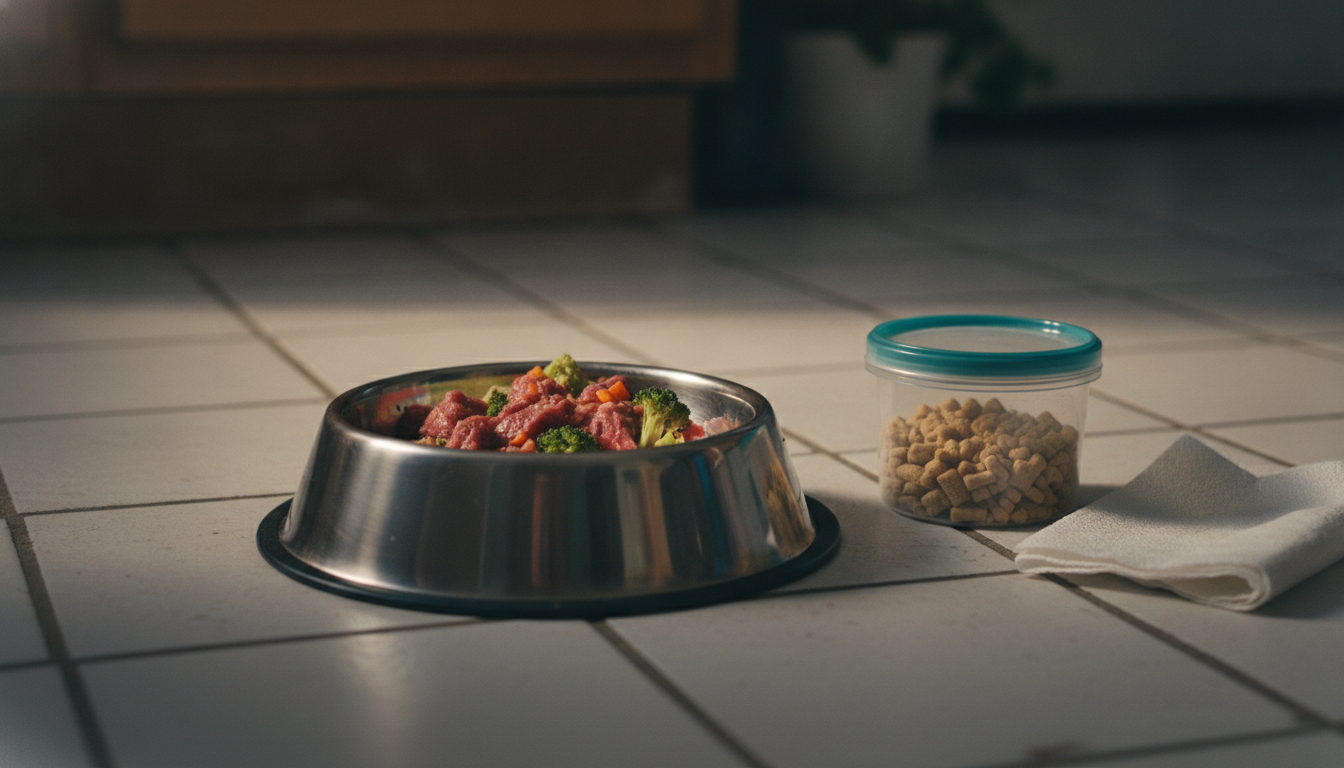
Owners who do best with raw feeding are typically those with a single dog or a small number of dogs, a freezer with dedicated space, a household without high-risk individuals, and the time and willingness to source carefully or invest in quality commercial raw products. If you have a large-breed dog, the collar and gear you use matters as much as the food — and the same principle applies: choosing the right equipment for a big dog takes research, not just enthusiasm.
Raw feeding is harder to sustain if you have young children at home, a dog with a compromised immune system, or a budget that doesn't flex easily. That's not a judgment — it's just an honest fit assessment.
A few things to do before you switch
- Talk to your vet first. Especially if your dog has existing health conditions, kidney disease, pancreatitis, or a compromised immune system, get a professional opinion before changing the diet.
- If you go commercial raw, look for AAFCO compliance. The label should state the food meets AAFCO nutritional profiles for your dog's life stage. This is your baseline quality check.
- If you go home-prepared, work with a veterinary nutritionist. Not a recipe from a blog (including this one) — a qualified professional who can formulate a complete, balanced diet for your specific dog's weight, age, and health status.
- Transition gradually. Switching abruptly can cause digestive upset. A slow transition over a week or two gives your dog's gut time to adjust.
- Treat food safety like a kitchen protocol, not a suggestion. Separate cutting boards, immediate cleanup, washing hands before touching anything else. Every single time.
The honest bottom line
A raw diet can be a genuinely good choice for some dogs in some households. It can also be an expensive, time-consuming, and nutritionally risky choice if approached casually. The deciding factor isn't which camp argues more passionately online — it's whether you can execute it correctly and consistently for your specific dog and your actual life.
Whatever you decide, the goal is the same: a dog who's well-fed, healthy, and thriving. The diet is the tool, not the point.
Browse Petocart's dog food and treat selection to find options that fit your dog's diet — whether you're going raw, staying with kibble, or landing somewhere in between.
Frequently Asked Questions
Is a raw dog food diet safe for puppies?
Puppies have different nutritional needs than adult dogs, and getting those ratios right on a raw diet is especially critical during growth stages. If you want to feed a puppy raw, it's strongly advisable to use a commercially prepared raw food that meets AAFCO nutritional profiles for growth, and to consult a veterinarian before starting.
Can I mix raw food with kibble in the same meal?
Many owners do mix raw and kibble, and while the "different digestion rates" concern is often overstated, there are practical reasons to be cautious — primarily around keeping track of total nutritional intake and avoiding contamination of dry food with raw meat juices. If you mix, keep portions separate until serving and clean the bowl thoroughly after each meal.
How do I know if a commercial raw food is nutritionally complete?
Look for an AAFCO nutritional adequacy statement on the packaging. It should specify the life stage the food is formulated for (adult maintenance, all life stages, etc.). If that statement isn't present, the product hasn't been verified as a complete diet and should only be used as a supplement or topper, not a sole food source.
What's the difference between freeze-dried raw and fresh frozen raw?
Freeze-dried raw has had moisture removed through a low-temperature process, making it shelf-stable and easier to store and travel with. Fresh frozen raw is kept at freezing temperatures and must be thawed before serving. Both aim to preserve the nutritional profile of raw ingredients, but freeze-dried is generally more convenient (and often more expensive per serving). Neither is inherently superior — it comes down to your storage setup and budget.