Cart
0
You unbox it, plug it in, press the button — and your dog disappears under the bed. If that sounds familiar, you're not alone. The vacuum grooming brush is one of those tools that makes perfect sense on paper (groom and collect fur in one pass) but requires a little patience the first time a nervous dog meets it. This post is for anyone who just bought one, or is thinking about it, and wants an honest picture of what the experience actually looks like.
What a Vacuum Grooming Brush Actually Does
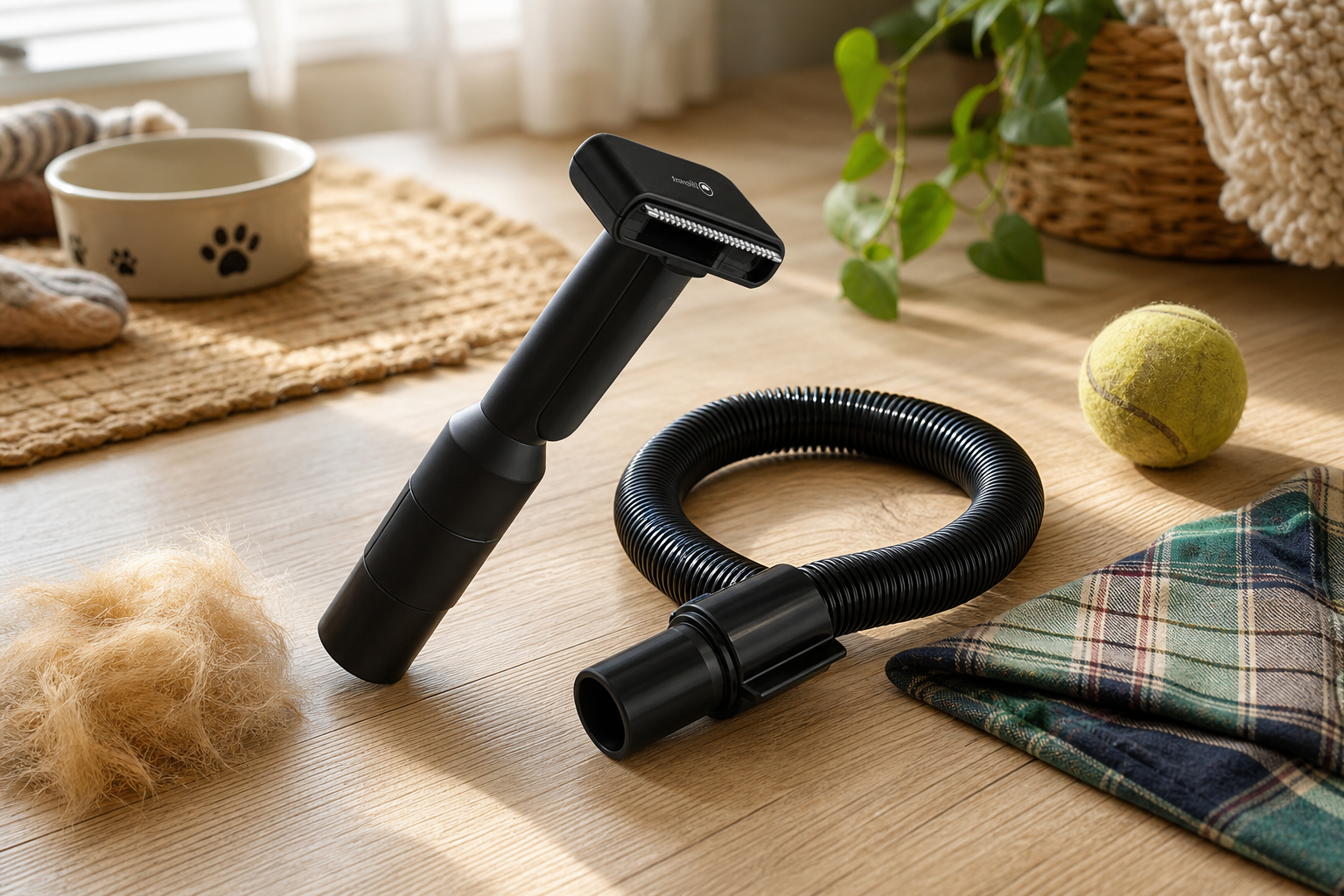
The concept is simple: instead of brushing loose fur onto the floor, the sofa, and your dark trousers, the brush head connects to your vacuum or hair-cutting system via a flexible hose. As you groom, suction pulls the shed fur directly into the vacuum — off the dog, off the air, and out of your home in one motion.
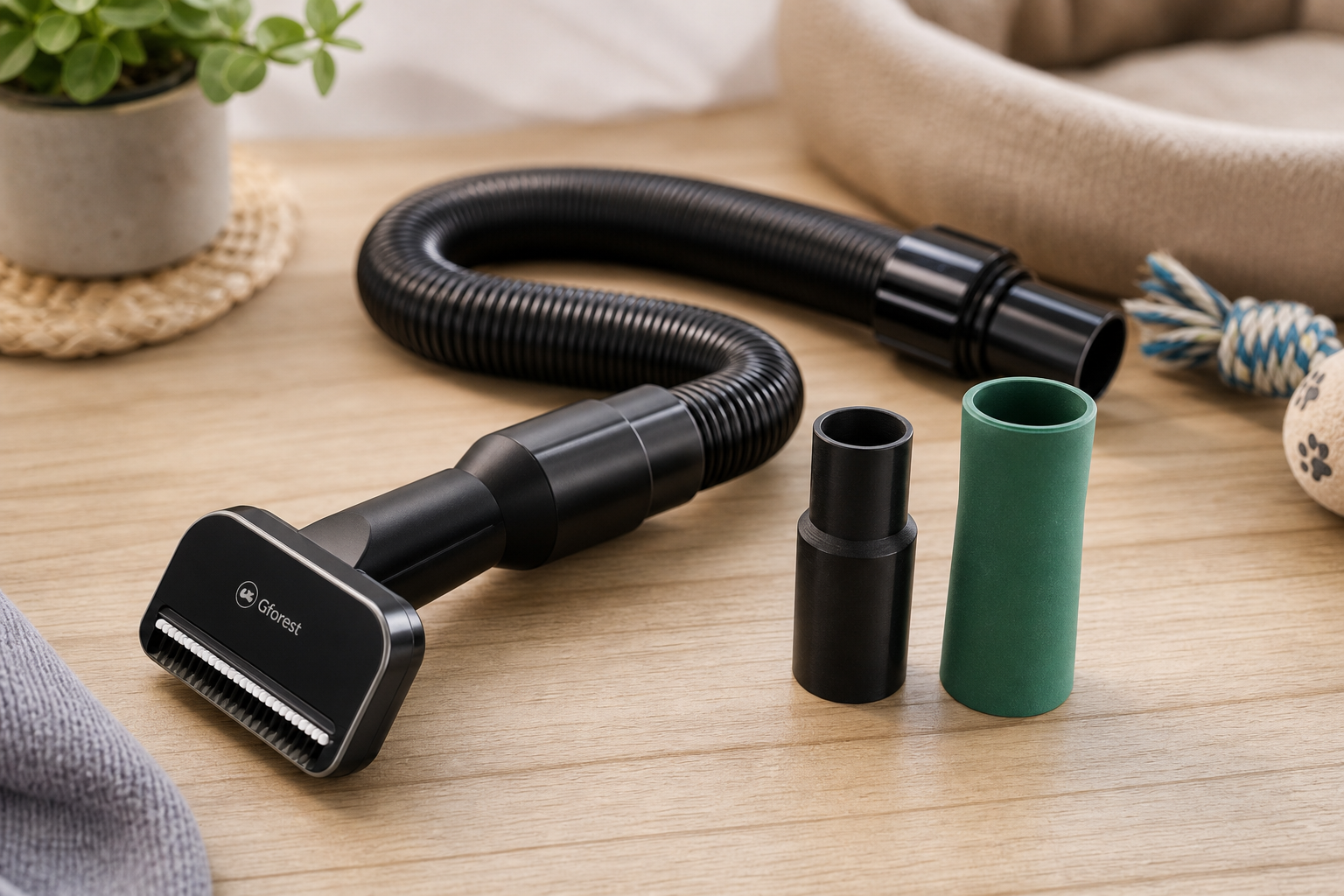
The Gforest Pet Vacuum Grooming Brush - Silicone Deshedding Tool for Dogs & Cats, Small, Black, Model SK-PET-ZW-21 is built around this idea. It's constructed from durable silicone and includes a metal teeth shedding tool for working through the undercoat, plus a flexible hose that connects the brush head to your vacuum or cutting system. The kit also comes with adapter pieces — a smaller black adapter and a green foam adapter — so it can fit different hose diameters. The whole assembly is compact and pistol-grip shaped, which makes it easier to maneuver around a wriggling dog than a bulky attachment.
What it doesn't do: it's not a standalone device. It needs a vacuum on the other end to create suction. If your vacuum is loud, that's the variable that matters most for how your first session goes.
The Real First-Time Experience (Honest Version)
Most dogs fall into one of two camps on day one. The first group is curious — they sniff the brush, accept it, and within a few minutes you're pulling clouds of fur off a dog who's standing still. The second group hears the vacuum hum and immediately wants to be anywhere else.
Neither reaction is a problem with the tool. It's just a dog being a dog. The suction and the motor noise are genuinely new sensations, and dogs who are already sensitive to the vacuum cleaner will need more time. The good news is that most dogs come around faster than owners expect, as long as you don't rush it.
How to Introduce It Without a Standoff
Don't start with the vacuum running. Let your dog sniff the brush head while it's completely off and still. Leave it on the floor near their bed for a day if you need to — familiarity before function.
When you're ready to try it properly, work in stages:
- Vacuum off, brush moving. Run the brush head over your dog's coat the way you'd use any regular brush. No suction, no noise. Let them feel the silicone teeth and the metal deshedding comb against their coat. Reward generously.
- Vacuum on, brush away from the dog. Turn the vacuum on in the same room but keep the brush pointed at the floor or a towel. Let your dog hear the noise and realize nothing bad is happening. Keep the session short — a minute or two, then treats, then done.
- Vacuum on, brush on the dog. Once your dog is relaxed with the sound, bring the brush back to their coat. Start at a low-stakes spot — the back, away from the face and paws. Keep your movements slow and steady. If they shift away, pause, let them settle, then continue.
Most dogs get comfortable within two or three short sessions spread over a few days. The ones who take longer are usually dogs who already have a strong fear of the vacuum cleaner — in those cases, working on vacuum desensitization separately (treat-and-retreat training) will help more than any grooming-specific trick.
What a Normal Grooming Session Looks Like
Once your dog is comfortable, a session is genuinely straightforward. Work section by section — back, flanks, chest, legs — using long, slow strokes in the direction of the coat. The metal deshedding teeth pull out loose undercoat while the suction carries it away. You'll see the fur disappearing into the hose rather than floating up into the air, which is the whole point.
The silicone construction means the brush head is gentle on the skin, so you can apply light pressure without worrying about scratching. For dogs with thicker coats, the metal teeth attachment does the heavier lifting on the undercoat. Switch between the two based on what your dog's coat needs at that moment.
Keep sessions shorter than you think necessary at first. A dog who sits calmly for ten minutes is more useful than one who tolerates twenty and then refuses the next session. Build up gradually.
A Note on Fit and Compatibility
The Gforest brush ships with two adapter pieces — a narrow black one and a wider green foam one — specifically to handle the different hose diameters on common vacuum models. Before your first session, test the connection at the hose end while the vacuum is off. A secure fit matters: a loose connection reduces suction and makes the whole thing less effective. If neither adapter fits your vacuum perfectly, check the hose diameter against the adapters before assuming there's a defect.
Is It Worth It for a Shedding Dog?
If your dog sheds heavily and you're spending real time vacuuming furniture, clothes, and floors after every brush session, then yes — consolidating the grooming and the cleanup into one step is a meaningful time saver. It's also genuinely better for air quality: loose fur and dander that would normally drift around the room go straight into the vacuum filter instead.
It's not a magic fix for a dog who hates being groomed in any form. And it's not the right choice for a dog who's so noise-sensitive that even a quiet vacuum causes distress without significant desensitization work first. For most shedding dogs in most households, though, it earns its place quickly.
The Gforest Pet Vacuum Grooming Brush is currently listed at $68.32 on Petocart. It's showing as unavailable right now, but you can check back for restocking or browse Petocart's full grooming range in the meantime — there are options worth looking at while you wait.
Frequently Asked Questions
Will a vacuum grooming brush work with any vacuum cleaner?
Not every vacuum, no. The brush attaches via a flexible hose that connects to your vacuum's intake. The Gforest brush includes two adapter pieces to fit different hose diameters, but it's worth checking your vacuum's hose size before buying. Canister vacuums and shop vacs tend to be the most compatible; some cordless stick vacuums may not have a compatible port.
Is a vacuum grooming brush safe for a dog's skin?
The Gforest brush uses a silicone head, which is gentle on the skin when used with light to moderate pressure. The metal deshedding teeth are designed for the undercoat, not the skin directly — use them with the same care you'd give any deshedding comb. If your dog has any skin irritation, wounds, or sensitive patches, avoid those areas entirely.
My dog is terrified of the vacuum. Can I still use this?
You can, but it takes more groundwork. Dogs with a strong vacuum phobia need desensitization training before the grooming brush enters the picture — gradual, reward-based exposure to the vacuum sound at increasing volumes over several sessions. Trying to rush it usually backfires. Once the vacuum itself is no longer a trigger, introducing the brush attachment is much smoother.
How often should I use a vacuum grooming brush on a shedding dog?
That depends on your dog's coat type and shedding level. Heavy shedders during seasonal coat blows may benefit from more frequent sessions, while dogs with moderate shedding might only need it once or twice a week. Start with shorter, less frequent sessions until your dog is comfortable, then adjust based on how much loose fur you're managing between sessions.